
Common Ground Song 144 ‘When Jesus wept’
Words /Music: William Billings (c.1770)
YouTube recording: https://www.youtube.com/watch?v=H9vidNsNFkw
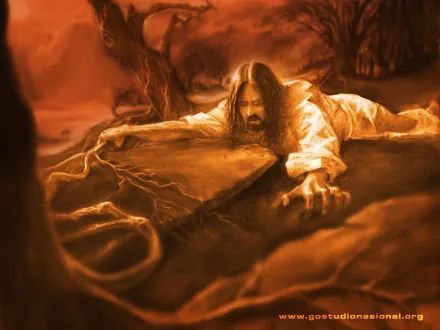
Featured image: Jesus in agony, artist unknown
This is a canon or round for four voices from an 18th century American composer, William Billings. It is intended to be sung unaccompanied. The version in Common Ground only includes Billings’ original words (one stanza) but the linked video includes two additional stanzas by Brian Penney (2008) which are worth including here.
Billings’ text is out of copyright, so I quote it in full: ‘When Jesus wept, the falling tear in mercy flowed beyond all bound. When Jesus groaned, a trembling fear seized all the guilty world around’. The Gospels record Jesus weeping three times: at the death of his friend Lazarus, over the fate of Jerusalem revealed to him as a prophecy, and in the Garden of Gethsemane. I presume the composer had the last of these in mind, which is why I have set it for Mandy Thursday.
On this day, we remember Jesus’ last night on earth. When in the darkness after his last Passover meal, he went with his disciples to his favourite praying-place in Jerusalem. ‘He withdrew about a stone’s throw beyond his disciples, knelt down and prayed, “Father, if you are willing, take this cup from me; yet not my will, but yours be done.” An angel from heaven appeared to him and strengthened him. And being in anguish, he prayed more earnestly, and his sweat was like drops of blood falling to the ground.’ (Luke 22:41-44, NIV)
Billings’ words, and Penney’s second verse (essentially a paraphrase of Luke’s words above) remind us that this ‘Blood, toil, tears and sweat’ (to quote Winston Churchill) were not just for the benefit of the Twelve, or Jesus’ wider circle of mainly Jewish disciples, but for the whole world. Christians believe that Jesus’ mission was to redeem the whole created order. A mission that will not finally be accomplished until he returns again in glory, but which has already begun in his sacrificial death to bear the guilt of the whole of humanity, and free us to serve him.
This blog post follows immediately from my reflection on the Last Supper, and the two belong together.