
A sermon for Environment Sunday, 7 June 2026.
Reading: Psalm 24:1-2
That short video we watched earlier was a trailer for one of the many nature programmes of the amazing David Attenborough. No-one has done more to open people’s eyes to the many amazing forms that life takes on this one planet. In a couple of minutes, we saw brief appearances from the largest animal – the blue whale – and one of the smallest – an ant – and many creatures of in-between sizes.
Men, women and children are somewhere in the middle. One child of thirty kilograms weighs ten million times as much as an ant, while a blue whale at two hundred tonnes is six thousand time as heavy again. Don’t try playing on a see-saw with either of them!
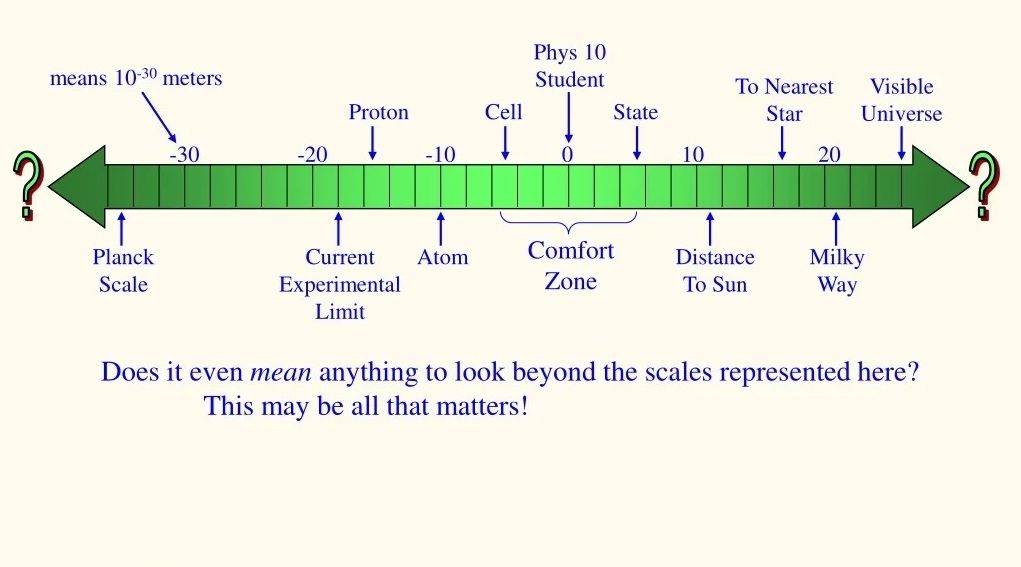
But the scale of God’s creation is far, far, bigger than that. We can only use maths to try to describe how big the universe is, or how small the tiniest invisible particles of matter or the waves of light. What is most incredible, though, is that God loves it all equally: Genesis tells us that he made all the stars of heaven and the insects that creep upon the earth, and all of it was good.
And there’s more to it than that. The very big, and the very small, do not exist independent of each other. We would not have light to live by without the power of the sun. And the very thoughts that we have are made by the microscopic neurons in our brains. Even among the animals and plants around us, the large and the small depend on each other. Whales eat millions of tiny animals called krill, while giant trees in the forest are pollinated by humble insects. As dead plants decay in the ground they form fertile soil for others, with the unseen assistance of worms and grubs.
This has been going on for millions of years, a web of life that just keeps on going. But it is unstable and easily disrupted. You may have heard the term ‘butterfly effect’, the idea that all earth’s systems of life are so inter-connected that a butterfly flapping its wings could make the difference whether or not a life-threatening storm forms in another part of the world.
That reference to storms reminds us that we live in a world with a rapidly changing climate, that threatens to make many parts of this wonderful world unliveable. Not only that: we also see many of God’s beautiful and necessary creatures going extinct. Animals and plants that have a vital role to play in maintaining the balance, disappearing because of human activity. As we fell forests, pollute the world with fumes and plastic, and eat our way through the ocean’s stocks of fish, we are tearing apart that web of life.
What can we do about it? It is easy to despair, thinking that as one person I cannot change what is happening. But we need to think at this point of what Jesus did. We believe that as the Son of God he existed before time. The Bible tells us that ‘Through him all things were made’. He knows exactly what is happening, because he is the love of God within all creation. And yet. He stepped down from the cosmic scale of the creator, to the human scale of people living in one place at one time. He took that teaching in the Psalms: ‘The earth is the LORD’s and all that is in it, the world, and those who live in it’, and helped people to see what that means in practice.
In his few years on earth, Jesus loved, taught, fed and healed as many people as he could – even though they were only a few of the inhabitants of Earth. He spoke of the importance of small and simple things: the mustard seed that grows into a large bush. The little sparrow, that does not live long but is loved by God. The gnat as well as the camel. The cup of water given to a thirsty person that is an expression of God’s love. The single stone, properly laid, on which a whole temple can be built. Here we see the heavenly scale brought down to the human scale.
Down the years, many people have drawn on that inspiration. Saint Francis is probably the best known. He lived simply, taking delight in the smallest part of creation (especially the birds and other animals that he called brother and sister), but devoted his life to calling others to follow the same way. The movement that he founded, and his influence, live on to this day.
What, then, should each of us do in response to our understanding of the world around us and how it is changing? I believe that our common calling, the very least that we should all do in response, is to respond with wonder and amazement to the God who has created a Universe on so vast, and so complex a scale. The first commandment, after all, is to recognise God and worship him.
Then, to do what we can with what we have around us at this human scale. God knows the scale at which we operate. So, to tend plants and plant trees, to live simply and eat sustainably, to recognise the part that animals of all sizes play in the balance of nature). To minimise the waste that we create so that other creatures can live. To use our influence in local politics to make our city a greener and nicer place. And so on. This is what God expects of everyone, because he has given all of us the shared responsibility to look after this world for the time that we are on it.
But there is also a challenge. Not everyone will be a Saint Francis, or for that matter a David Attenborough or a Greta Thunberg, but someone might be, if God calls and equips them for the task. Ask yourself, is God calling you to do more? Maybe to challenge injustice in the world. Maybe, young people, to take up a career in some kind of environmental work or in farming. Maybe to influence politics, or set up or join in an environmental movement? This is not for everyone, but it might be you, or someone you know.
Today we have thought about the scale of things: our place in a universe that is larger than we can imagine, made up of things smaller than we can imagine. We cannot influence those. But we can influence what is at a human scale, just as Jesus did: our neighbours and our local environment.
Let’s finish with a prayer:
Creator God,
Thank you for the world you have entrusted to our care.
For its beauty, and the interconnectedness of all living things.
Help us to take our responsibility as earth’s stewards seriously.
And bring the whole created order into your just and gentle rule.
Amen.
Prayer © USPG
One thought on “Acting at a Human Scale”