
St Peter's Bramley, Sunday 14 December 2025 – Advent 3
The third of a series of five Advent talks based on the prophecies of Isaiah.
Readings: Isaiah 35:1-10 / Matthew 11:2-12
Creative Commons licence Wikimedia Commons.
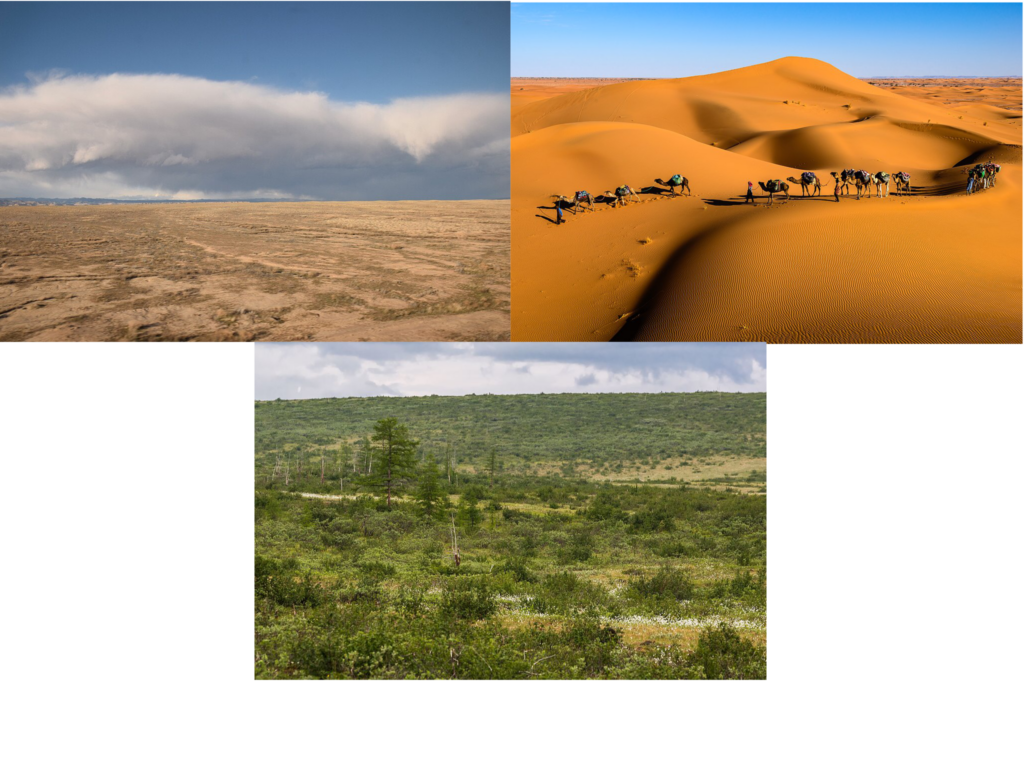
When you think of a desert, what images does it conjure up for you? Perhaps Nevada with tumbleweed blowing across the salt flats. Perhaps the Sahara, camels struggling up vast towering sand dunes. Perhaps the Siberian tundra, a frozen waste where trees struggle to grow.
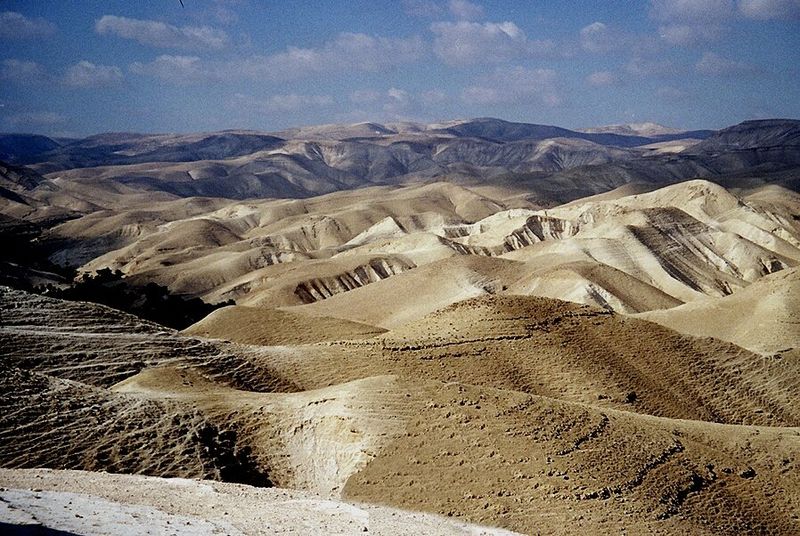
The desert that Isaiah had in mind was most likely the Negev, the hilly and arid region between Judea and Egypt. In the Bible this desert was often used as a symbol for the difficulties that his people faced. It’s an easy comparison to make. We often talk of feeling dry when we lack inspiration, or being ‘deserted’ when whatever support we had has been withdrawn.
To put this prophecy into context, it is set in the time when the people of the north of Israel had already been taken into captivity in Babylon, and the southern capital of Jerusalem was being threatened by the Assyrians. The people of the city must have felt deserted by God as their most holy place was at risk, and they themselves likely to be taken away from their homes, if they survived at all.
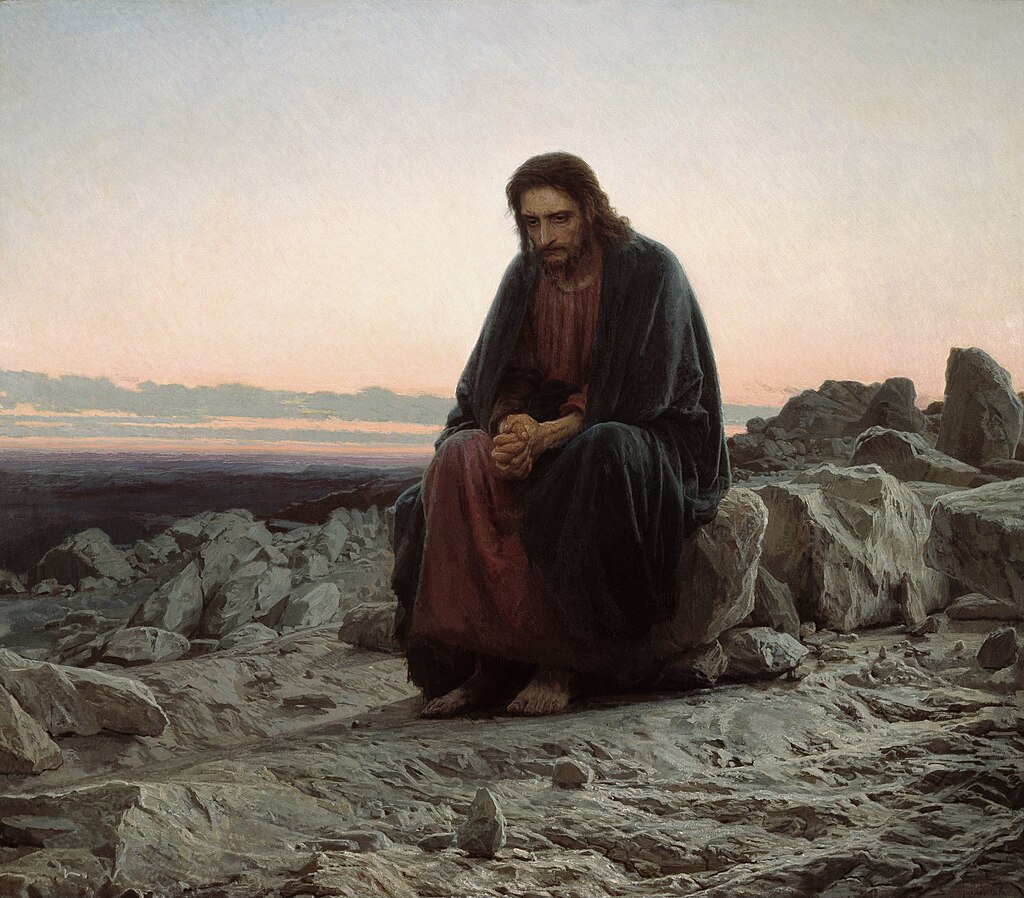
But although the Bible often refers to the desert as a hostile place, it is there that God often comes closest to his people, or rather, they come close to him. Think of Moses and the burning bush, or the provision of manna for the whole Hebrew people. Elijah being fed by angels, John the Baptist preaching good news to spiritually hungry people, and of course Jesus himself who faced down the Devil’s temptations and emerged stronger to start his ministry of healing. All these happened in desert places. Later in Christian tradition, monasteries were founded in deserts and other remote places, the better to concentrate on prayer and study. So, while we may think of a desert as a hard place to be, in fact, God often calls people into the desert precisely in order that we might encounter him there. Far from starving in the desert, it is in the desert that we can start to thrive.
That leads us into thinking about where the desert might be in our own lives. Sometimes it can be a physically hard place: being homeless, injured, sick or disabled, unable to do fully what in our minds we long to do. Sometimes it can be circumstances that restrict us: a demanding job, caring for a relative or young children, tied to commitments that are noble in themselves but take all our time and energy, and leave none for God.
Or it might be an emotionally hard place: depression, temptation, mental illness, an abusive partner or negative feelings. These are all real and valid places to be, nothing to be ashamed of. But it is hard to pray and praise when these things press on our minds.
Then there are the fears that beset us. Just as the people of Jerusalem in Isaiah’s time feared the Assyrian army, so today people have real fears around the effects of a failing economy, climate change and maybe even a coming war with Russia.
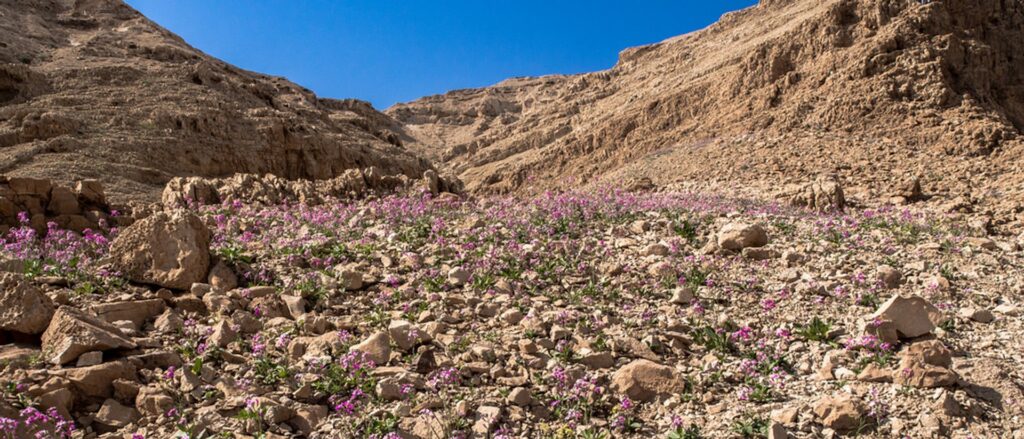
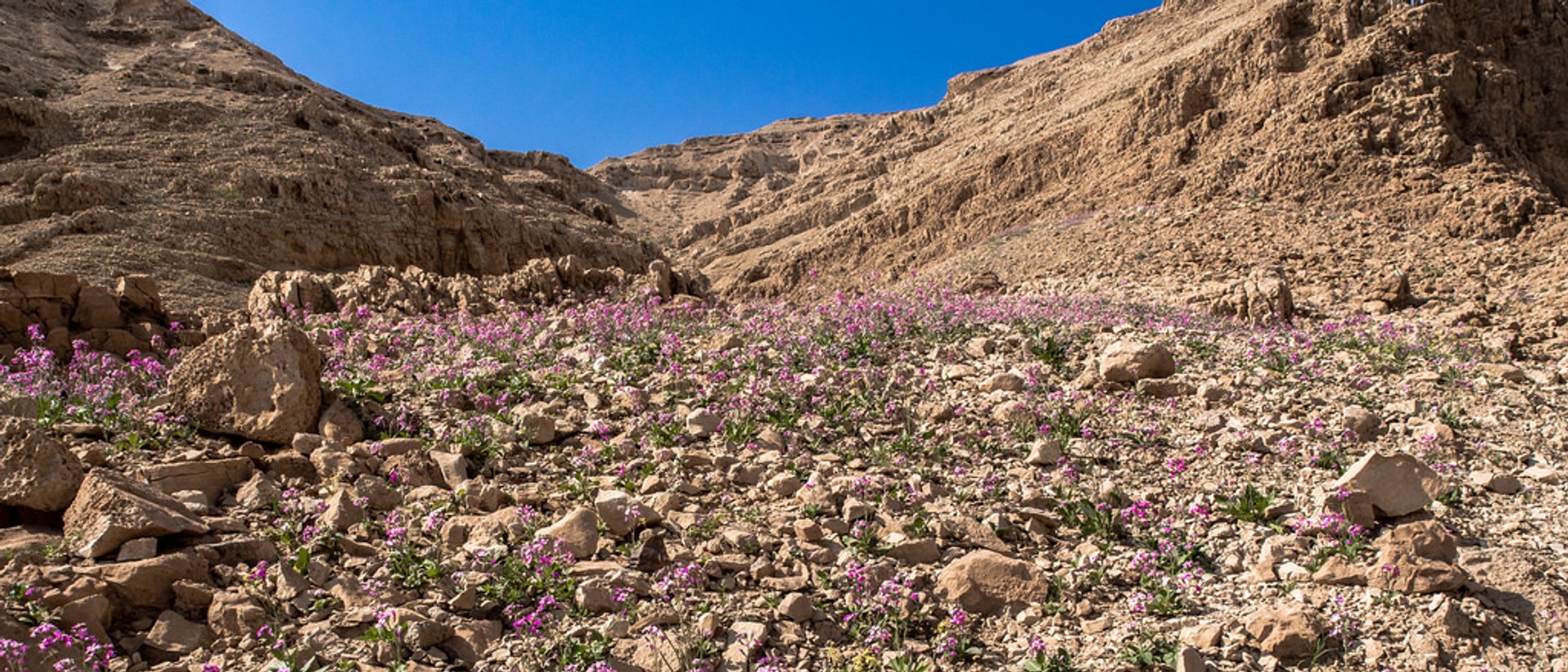
God knows all these things. He knows what desert each one of us is going through. And God never intended this world to be a hard place to be. All along he has planned to restore humanity back to living close to him. So, he answers with a promise. A glorious promise! “Waters shall break forth in the wilderness, and streams in the desert”. Instead of a barren landscape, flowers will bloom – as indeed they do in the Negev every spring, to make our hearts glad. For God’s intention is not just to restore humanity, but all of creation. The desert blooms, water flows, people are healed. It all fits together.
Isaiah also speaks to those who feel they are powerless or incomplete: the blind, lame, deaf and dumb. They will all be healed when God comes to the desert. This prophecy is taken up by Jesus when John’s disciples ask him whether he, Jesus, is the Messiah. He points to his own healing miracles as fulfilling this prophecy. Yes, it is Jesus himself who has come to the desert to make all these things come true.
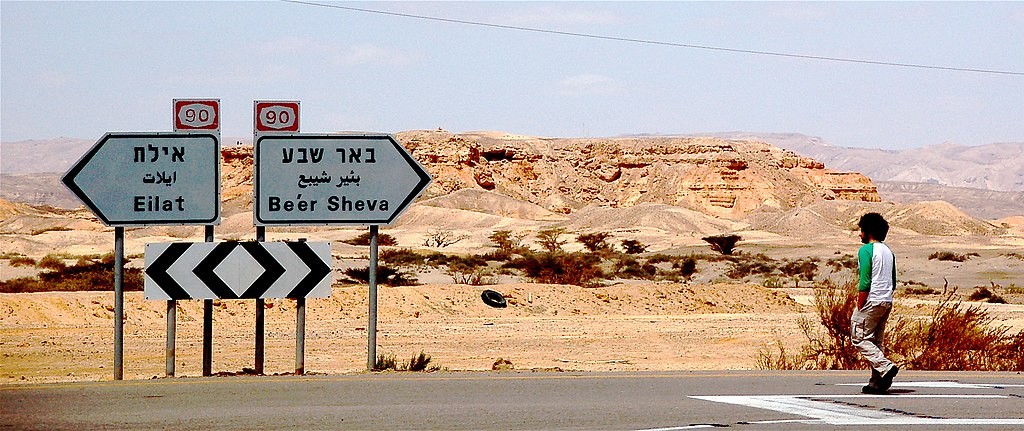
There is yet another aspect to Isaiah’s prophecy. Instead of the rough surface of the desert, he will make a smooth road for us to walk on. A road that leads to Zion, a symbol for God’s eternal kingdom of peace. A road with no lions or beasts on it – in other words, the things we fear will not harm us. What does this image of the highway in the desert mean for us as Christians? Well, Jesus himself is the highway, the road to the Father God, or as he also put it, “I am the way, the truth and the life”.
So, there are these three promises: the desert blooms, people are healed, there is a smooth and safe way to God. If we look at Psalm 84, we find all these, and another promise that the thirst for God’s spirit that we experience in the desert will be satisfied:
Blessed are those whose strength is in you, ♦︎
in whose heart are the highways to Zion,
Who going through the barren valley find there a spring, ♦︎
and the early rains will clothe it with blessing.
They will go from strength to strength ♦︎
and appear before God in Zion. [Psalm 84:4-6, Common Worship]
But before Jesus, there was John the Baptist. He was the one who prepared the way for Jesus, by calling people to repent of their sins and turn to God. And it is in this third week of Advent that the church focuses on John. Because as Isaiah said, only those who are God’s people, who are holy, who have been redeemed, who can walk on the way. Jesus also said that the way is narrow and not everyone will find it. Holiness is a choice. To put that another way, we must first follow John’s call to repentance, choosing which direction to go: the way of Jesus. Then we can join him and all God’s holy people on that highway to heaven. As Bishop Arun reminds us in his Advent reflection on this passage, when we are on that way with Jesus, we experience joy: not a surface happiness but a deep assurance that God is with us.
You may ask, why is it that at this time of the year, while the world around is all parties, tinsel and joyful songs in the run-up to Christmas, the Church celebrates Advent and its message of the desert? Because when we are honest with ourselves and recognise where these desert places are in our lives, and what it is that holds us back from encountering God, we can then be open to God meeting us in those desert places. He can cause the water to flow, the flowers to bloom, he can make us holy and set us on the highway that is Jesus, the way back to God.
The weeks after Christmas, when the decorations are down, the parties over and it’s back to work or school through the winter, are known for being the most depressing time of year. But for those who have faced the challenges of the desert now, who have let God into their lives in Advent, who have then celebrated the birth of Jesus at Christmas, the New Year can bring not depression but hope, and joy. We know we go forwards from Christmas as new people. People who have met with God, who have seen his new-born Son, who are set firmly on his safe and smooth highway in the company of all his pilgrim people.
Let’s wrap this up. Some things to think about in these last weeks before Christmas: first, identify your own desert – where is the dryness in your life? Second, feel at home there, know God is with you in the desert, not despite the difficulties you face but precisely because of them. Third, keep praying, ask Jesus to heal you, reveal himself to you, make you blossom like desert flowers, and set you firmly on his highway.
Amen.