
A sermon for the Sunday after Ascension
St Peter’s Bramley, 17 May 2026. Reading: Luke 24:36-53

Around this time each year the Church of England invites us to pray in particular for friends and family by name, under the title 'Thy Kingdom Come'. The theme for this year is 'God with us - in the joys and sorrows of life (and everything in between)'. You may have heard a very old English saying: ‘betwixt and between’. It means when one thing hasn’t quite finished, but something else has not yet really begun. A ‘between-time’.
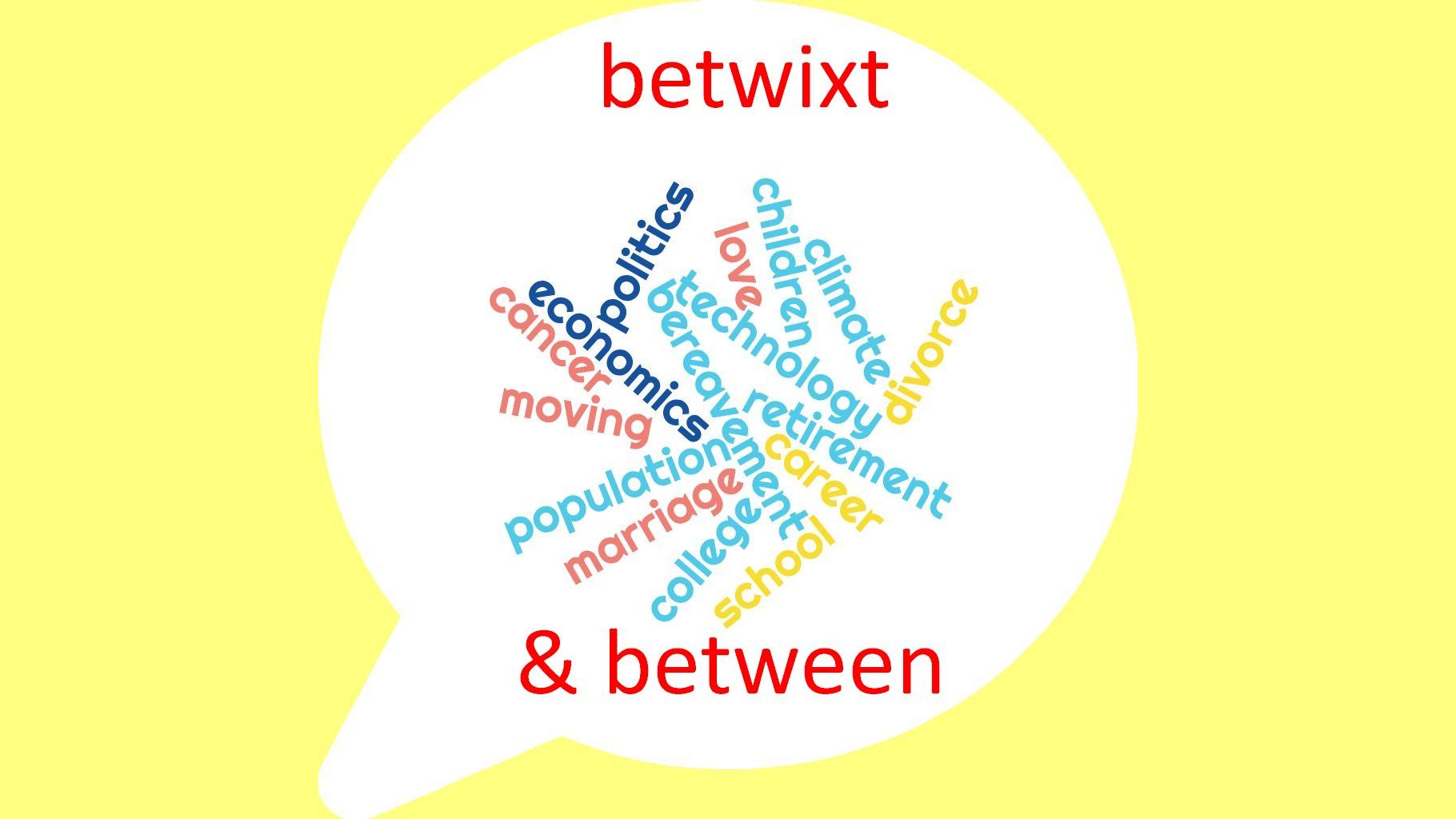
All of us will have experienced times of upheaval in our life, which we enter with one understanding of ourselves and our relationships, and leave with a very different one. It might be a positive experience: moving up from primary to secondary school or from school to college. Falling in love, getting married, moving house, becoming a parent, changing career, retiring. Or maybe a negative experience such as bereavement, divorce or receiving a cancer diagnosis. You can probably think of others.
On top of that, we are all in a time of upheaval with the societal changes we are going through. A shift in political allegiances is only a symptom of these, rather than a cause. Changes in population, in economics, in the climate, the disruption caused by AI and other technologies. We don’t yet know what society will look like in ten or thirty years’ time. These changes will affect us, possibly more than the usual life events that I have listed. Before I continue, take a few moments to share with the person next to you just one of those times of transition in your own life: was it good or bad, and how did it change you?
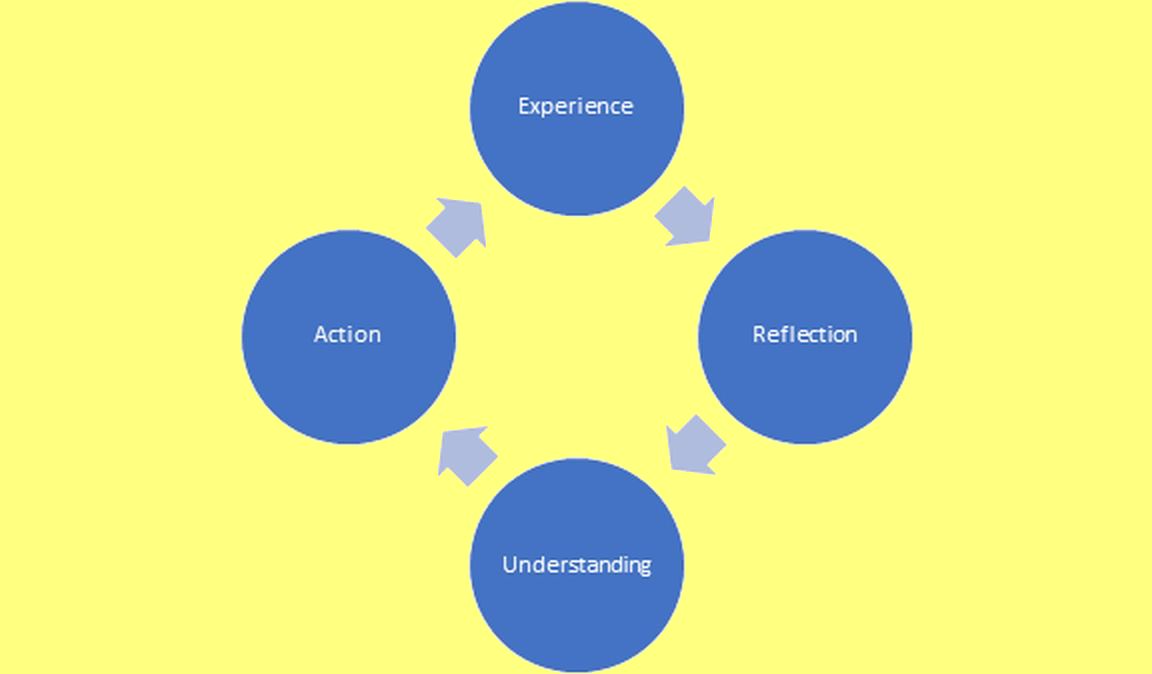
Some of these events that we have discussed are planned, others hit us suddenly and unexpectedly. When that happens, we may need help to process what is happening to us. There are many models of how we process change: here is one of them. We experience something, we reflect on what has happened and what it means, we come to a new understanding, we act on that.
That process might be a short one, but for life’s hard-hitting changes, it can take months or years to adjust to the new reality and live accordingly. What we often find in our own experience, is that those four stages of experience, reflection, understanding and action tend to overlap, not clearly one after the other. Reflection will take time, and our understanding grows through that time. Learning a new way of acting will also take time, often by way of trial and error. So we might think of them as strands woven together, rather than four distinct stages.
This, then, is the between-time. Because the experience itself might not be a single event, but a series of events, like the transition from Jesus’ earthly life to God sending the Holy Spirit. The disciples in our reading from Luke’s gospel today were experiencing just such a ‘between time’ The stories of Crucifixion, Resurrection, Ascension and Pentecost are spread across a period of seven weeks, describing what can be seen as one event. Not just another stage in life’s journey for the individuals. It was a time of transition for the whole Jewish people, at least those who were prepared to engage with it. It was, in fact, a fault line in human history. Through the last chapters of the gospels, and the first chapters of the book of Acts, we see how the disciples coped with living in this between-time.
Jesus tried to explain to them many times what would happen during and after his death. But they didn’t understand what he was saying in the years they were with him – it was beyond their experience. They didn’t grasp it after his long talk at the Last Supper. They still didn’t comprehend when they heard the first reports of the resurrection and the testimony of the couple from Emmaus (Luke puts the Ascension immediately after the return of those two people). They needed to hear it all again from Jesus himself. ‘He said, “This is what I told you while I was still with you: Everything must be fulfilled that is written about me in the Law of Moses, the Prophets and the Psalms.” Then he opened their minds so they could understand the Scriptures’. He encouraged them through this time to use the Jewish scriptures to inform their reflection on their experience. They gradually grew to understand what was happening and what it would mean for them. And they began to act differently.
When these experiences happened, it hit them hard. Look at the emotional changes recorded in this passage: ‘Startled and frightened’ when Jesus appeared suddenly. ‘Joy and amazement’ when they saw his wounded hands and feet, but also ‘disbelieving‘. And finally, ‘great joy’ when he blessed them before disappearing for the last time. If that is what happened to them, we should not be surprised if we, too, experience conflicting emotions in our response to big events in our lives.
What change were Jesus’ disciples going through? How would their lives be different? Until his death, Jewish people had the Law of Moses to live by. After Pentecost, they identified as ‘followers of the Way’ (only later called ‘Christians’). The Way was not just the teaching of Jesus, but life in the Holy Spirit. That’s a massive change: from the restrictions of living by religious laws, to the freedom of life in the Spirit. For now, with this account of the Ascension, they are still in the middle of this momentous event. Betwixt and Between. And wondering what to make of it.
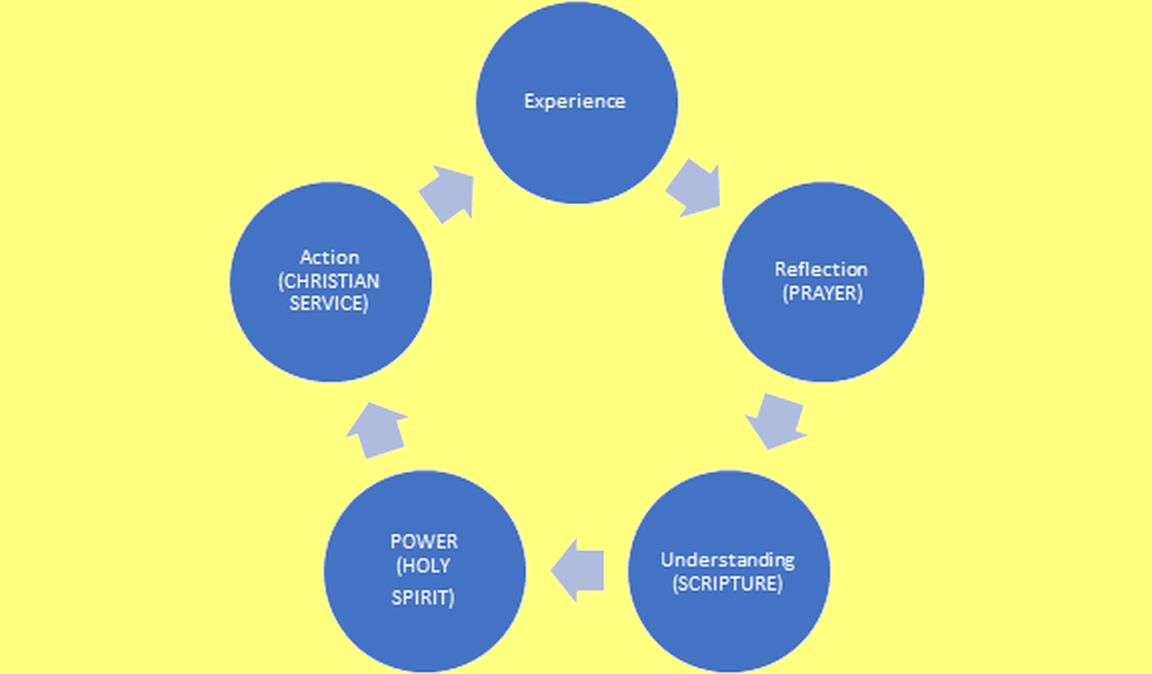
Let’s look at a slightly different version of that reflective cycle diagram. After Jesus was raised from the dead, before he ascended into heaven, he taught the disciples in a way that finally brought them to a new understanding, but he cautioned them not to rush into doing anything new. Instead they were to “stay in the city until [they] have been clothed with power from on high”. That power, of course, was the Holy Spirit.
What did they do while waiting? Look at the last two verses of Luke’s gospel: ‘Then they worshiped him and returned to Jerusalem with great joy. And they stayed continually at the temple, praising God.’ Worship, praise, and joy – in their existing congregation. The time would come when the Church separated from the Temple, but for now, still in that between-time, they carried on worshiping and serving God in the way that they knew.
That is what makes a difference to us as Christians. In the between-times in our individual lives, being part of a Christian congregation can be our main form of support through bewildering changes. When life hits hard, don’t drop out of church: engage more, so that we can help each other through the difficulties. And the Christian journey is itself a between-time.
If you came to believe in Jesus suddenly, as some people do, no doubt you went through that cycle of reflective experience and emotional upheaval at that time. Because the consequences of that decision to follow him are life-changing. Reflection like this, where we go through all the stages that anyone does at a time of change, is a vital part of Christian discipleship. Remember, we have that second diagram to work with: asking the Holy Spirit to guide us, open up the scriptures to us, give us a true understanding of where God is in our experience, and the power to do things differently according to his will. As a Christian I need to change my self-understanding.
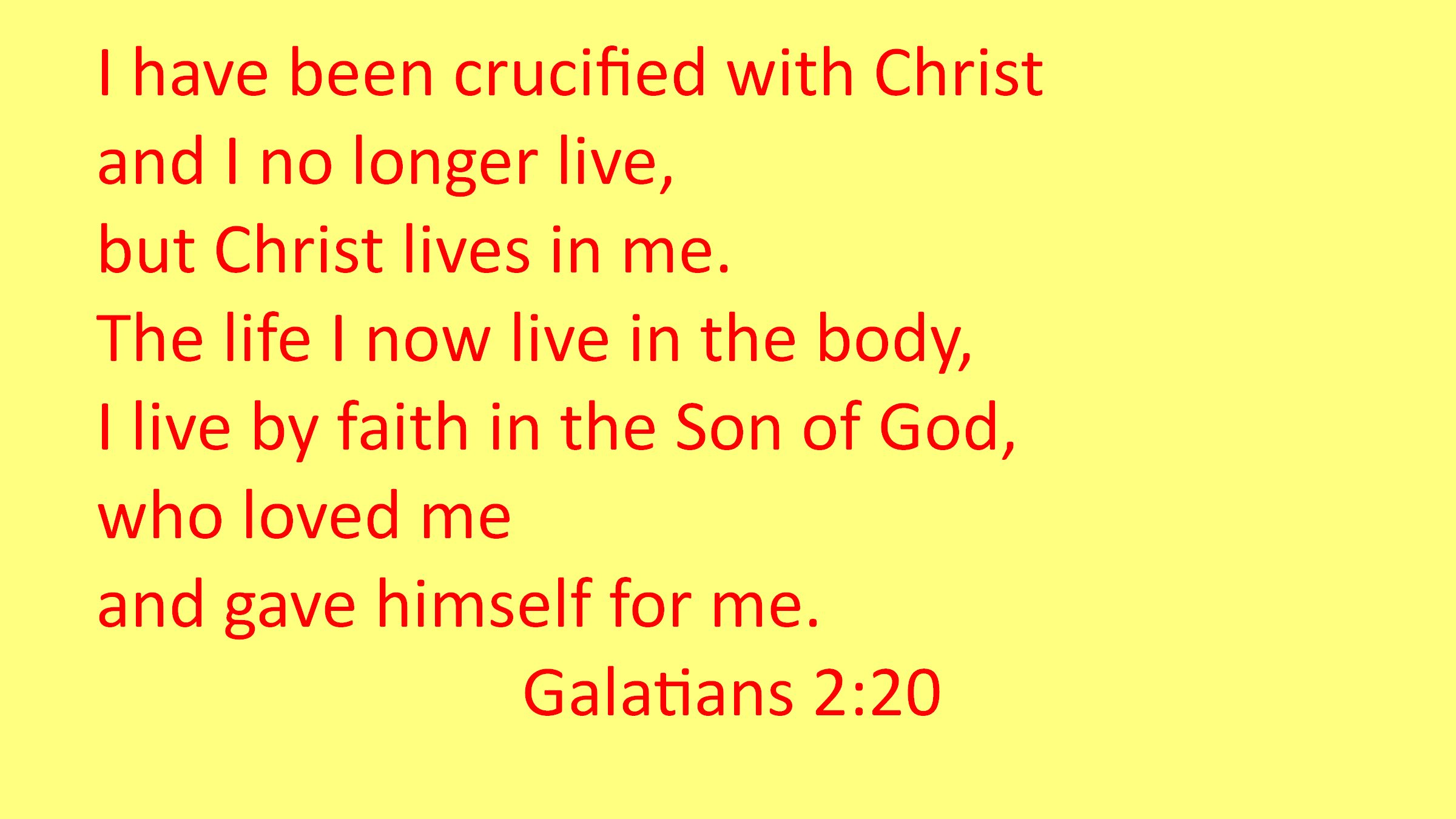
As St Paul put it so memorably, “I no longer live, but Christ lives in me. The life I now live in the body, I live by faith in the Son of God, who loved me and gave himself for me.” I am no longer an individual making my own way in life (with or without the support of family members). I am part of the Body of Christ – so are you. And we are empowered by the Holy Spirit to live together as that body. This is such a fundamental change in our understanding that, like those first disciples, we may fail to understand it at first. We keep coming back to it time and again.
Jesus challenges us to go deeper. As we experience different new things in our walk with him, he wants us to reflect on how he is changing us. He wants us to come to a fuller understanding of the Christian life and of our place in the Church. To accept the challenge of what he wants us to become, and importantly, to receive the gifts that the Holy Spirit is giving us to enable us to become those people he wants us to be. All along the way, we need to ask him to open our minds to understand the Bible – and how it applies to whatever experiences we may be going through.
This also applies to the people we pray for. For Thy Kingdom Come this year, I invite you to think of friends who are going through a difficult between-time at the moment, and commit to praying for them each day. If you want help praying for them, or for yourself, or if you are not sure where you are in the between-time of the Christian life, Margaret will be in the chapel after the service to pray with you, or you can speak to me, Adrian or Julia. But let’s pray together:
God of surprises,
unchanging and eternal but always active,
Be with us through all the between-times of our lives.
Open up the Bible to us to aid our understanding.
Help us to reflect on what we are experiencing.
Send your Holy Spirit to empower us
for the changes that you want to see in us
to make us more like Jesus.
This we ask in His precious name.
Amen.