
Sermon for Bramley St Peter, 11 October 2026
The second in a 4-part sermon series on ’Fruitfulness’
Readings: 1 Timothy 4:6-16 / John 15:11-4
When Linda and I got married, we spent the first few years living in a vicarage that was not needed by the Diocese at the time. It had been vacant for a while, and the last occupant had a disability, so the garden had become neglected. I spent many weekends the first summer pruning back overgrown bushes, removing bindweed, cutting the two-foot-high grass with shears (a sickle would be ideal, but B&Q don’t sell those), and there was so much ivy we had to pay someone to remove it.
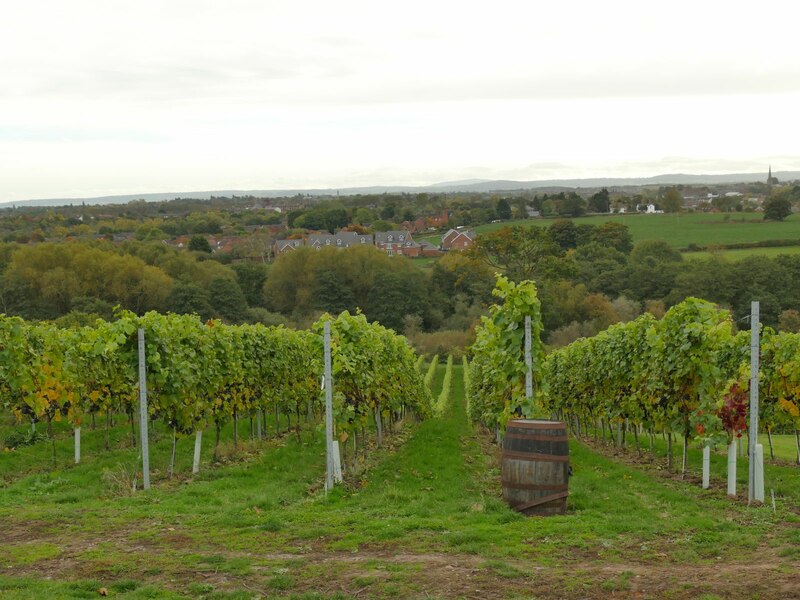
By the end of the summer it was looking more like a garden. And there at the far end, out of sight when we started, was a rickety wooden trellis with a grape vine growing on it. In fact, growing way beyond it, wrapping itself round any bit of fence or bush it could find.
Now southern England can produce some fine wines. You might think that such a large vine would produce a fine harvest of grapes. Chateau Charlton 2003, anyone? But no. At best, for all the time we were there, it produced a few bunches of small and sour grapes, fit neither for eating nor winemaking.
Why? Because its growth had been neglected, left to nature. Without being watered through dry summers, or fed with compost, or pruned, it could not produce useful fruit. What energy it had went into growing tendrils that went off in all directions but yielded no benefit.
When Jesus compared himself to a vine, and each of us to part of a branch within it, he gave us an image of a plant that holds together, that is nourished from its roots in God, and which will bear good fruit. But only if it is kept supported by the trellis or fence, and pruned regularly of those tiny tendrils that take up energy without bearing fruit.
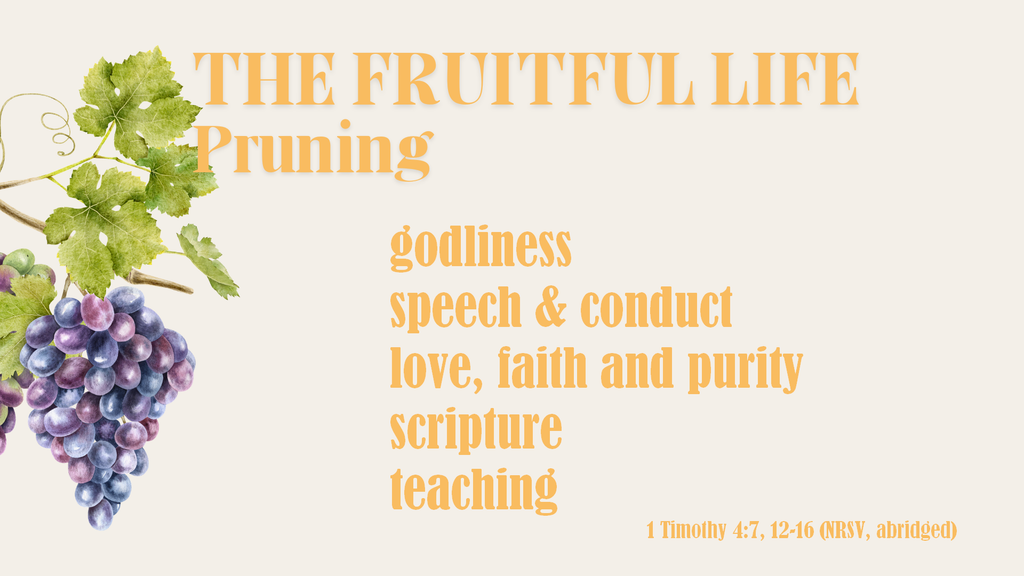
Paul, writing to Timothy, was also concerned that Timothy, a young pastor in the early church, should be trained and pruned so that he could be fruitful in growing his church in a way that would remain faithful to Christ. “Train yourself in godliness”, he urges, and goes on to expand on what that might look like. “Set the believers an example in speech and conduct, in love, faith and purity. Give attention to the reading of scripture, to exhorting, to teaching”.[i]
But Paul was not only concerned that Timothy should do all the right things as a pastor. Of course we expect church leaders to know the Bible, be able to preach and encourage others. But what about their inner character, their personal life? What does a leader, or indeed any Christian, do when we are not in church or with our fellow believers? What we do at home and in our leisure time can be just as important in our discipleship as those more obviously godly activities. So elsewhere in his two letters, Paul encourages Timothy to be grateful for God’s provision, to follow his conscience,[ii] to eat healthily and drink in moderation[iii], “shun youthful passions”,[iv] and “avoid pointless philosophical discussions”[v] (he writes that in both letters, so it must be important).
When I was training as a lay minister, about sixteen years ago now, we were all asked to develop what was called a ‘rule of life’. Some people call it a ‘rhythm of prayer’, but it means essentially the same thing. The idea goes back to the medieval monastic communities. Monks did not sing psalms and pray the whole time. They also had to go out work, whether that was in the fields, the mill, the monastery kitchen or hospital, or in the library writing and copying books. Whatever their allotted task, they had to be trained to do it in a godly way. How they spent their time mattered to the individual, and to the life of the whole community.
We were given guidelines for this, but the point of the exercise was that everyone’s life is different. The bits of my life that need nurturing, and the parts that need pruning, will be different from yours. Depending on your age, work and family circumstances, you might have more or less flexibility in how you spend your time. But what time you do have, should be spent wisely. Let’s look at what a rule of life might cover:
The first heading was ‘Personal spirituality’. That will cover how often you read the bible and how much time you aim to spend in prayer. We were also encouraged to find a spiritual director and go on retreat from time to time. Sometimes it might mean changing the way you study the Bible if one way isn’t proving helpful.
The second heading was ‘Parish life’. How often you attend church, including being on one or more rotas to help out. It might include going to different churches when on holiday, joining a small group or online course for Bible study, getting to know the members of the congregation better; and your level of regular giving. But bearing in mind that we’re thinking about pruning what is no longer helpful, pruning, in parish life, might sometimes mean giving up a church activity if there is something better you could be doing with your time
The third heading was ‘Work, health and lifestyle’. If you are in work or studying, think how to approach it to avoid unnecessary stress, find time to pray and reflect during the working day, find who else is a Christian and maybe set up a prayer group at work if there is not one already. ‘Pruning’ in a work context might mean working fewer hours, or delegating some of your tasks, if your role permits this.
Health and lifestyle would cover your exercise routine (appropriate to age and fitness), getting enough sleep, and what we eat and drink, or avoid eating. And very importantly, making time for relaxation and hobbies. Because our bodies matter to God. Pruning our health could mean changing our diet, cutting down on drinking, doing more, or sometimes less, exercise, or spending less time on a hobby if any other area of life is being neglected as a result.
The next heading was ‘Family and friends’. This would include praying with or for your family, quality time with your partner, having a wider social life outside church circles, and (within your budget) to enjoy days out and holidays.
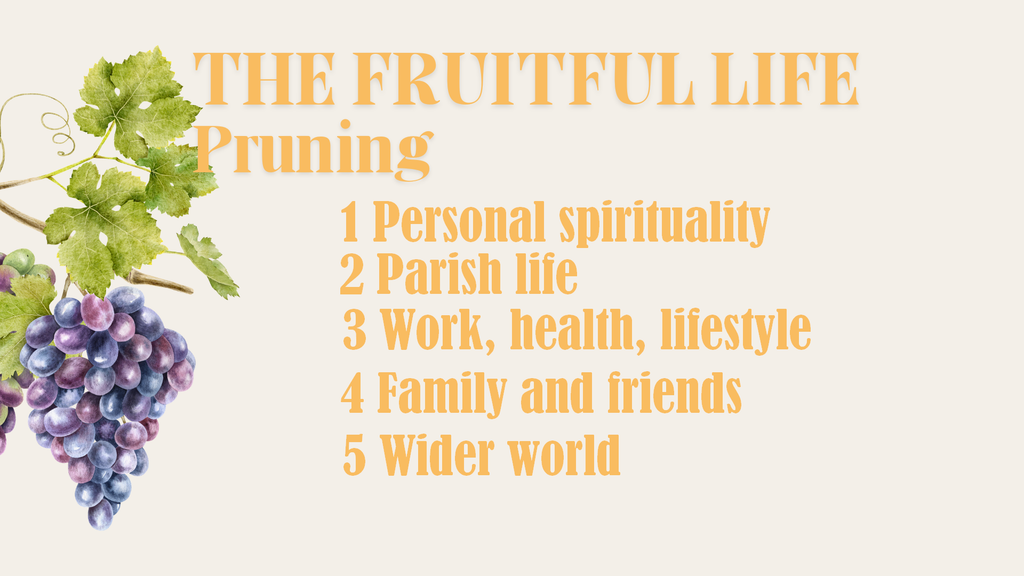
Finally, ‘The wider world’. That might include keeping up with news and current affairs; taking part in community activities; shopping and saving ethically where possible, and giving to charities other than the Church. Since I first wrote a rule of life, the world has changed, and this part of it should certainly now include sensible use of AI and social media. I know that I definitely need to prune the time I spend scrolling on my phone, and I’m not the only one!
All of those are just ideas. The aim is to work out a balance of spirituality, work, family life and personal time that works for you. One that will keep you physically and mentally healthy, engaged with the world and the church, and keeping God at the heart of all that you do. Writing that rule is not difficult. Keeping it, of course is a different matter.
Jesus was quite clear that what matters to him is not keeping detailed rules, rather being in healthy relationship with God through him, and with other people. Think of a ‘rule’ not in the sense of a law that you will be punished for not keeping, but as a helpful guideline. In fact, much like the fence or trellis erected to help a vine grow in the right direction to keep it healthy and fruitful.
The aim, then, is for us to be a healthy part of Christ’s vine that can bear lots of good quality fruit. So, if we find that we struggle to keep a rule that we set for ourselves, it’s not wrong to reconsider that rule of life. It will, in any case, change through our lives. Preparing this talk has made me realise I need to update my rule of life, as the last version I had related to full time work and marriage, neither of which are now relevant. There are also parts of it that I know I have not been good at keeping, so I have something to work at. Where does my life need pruning, and where does it need more support, or training in a different direction?
There are two kinds of fruit we can bear: the kind within our own life – the fruits of the Spirit (love, joy, peace and so on) - and the fruit we cause to grow in other people, drawing them into God’s Kingdom. A good rule of life will help us achieve both. To be people full of the Spirit, able to nourish others. Which leads us towards next Sunday, when Adrian will talk about being grafted in to the vine. Let’s pray.
God our father, you are the vinegrower who tends this vine of which we are the branches. We open ourselves to you now, to be nourished by your Word, trained in the way you want us to go, and pruned of whatever is not fruitful in our lives. Keep us abiding in Jesus, and help us to find a rule of life that enables us to bear fruit for him. We ask this in His precious name. Amen.
[i] 1 Timothy 4:7, 12-16 (NRSV, abridged).
[ii] 1 Tim 1:19
[iii] 1 Tim 5:23
[iv] 2 Tim 2:22 (NRSV)
[v] 1 Tim 6:20 & 2 Tim 2:16 (JB)