
Common Ground Song 72 ‘Look and learn’
Words / Music: original © Nah Yung-Soo. English version: John Bell © WGRG / Iona Community
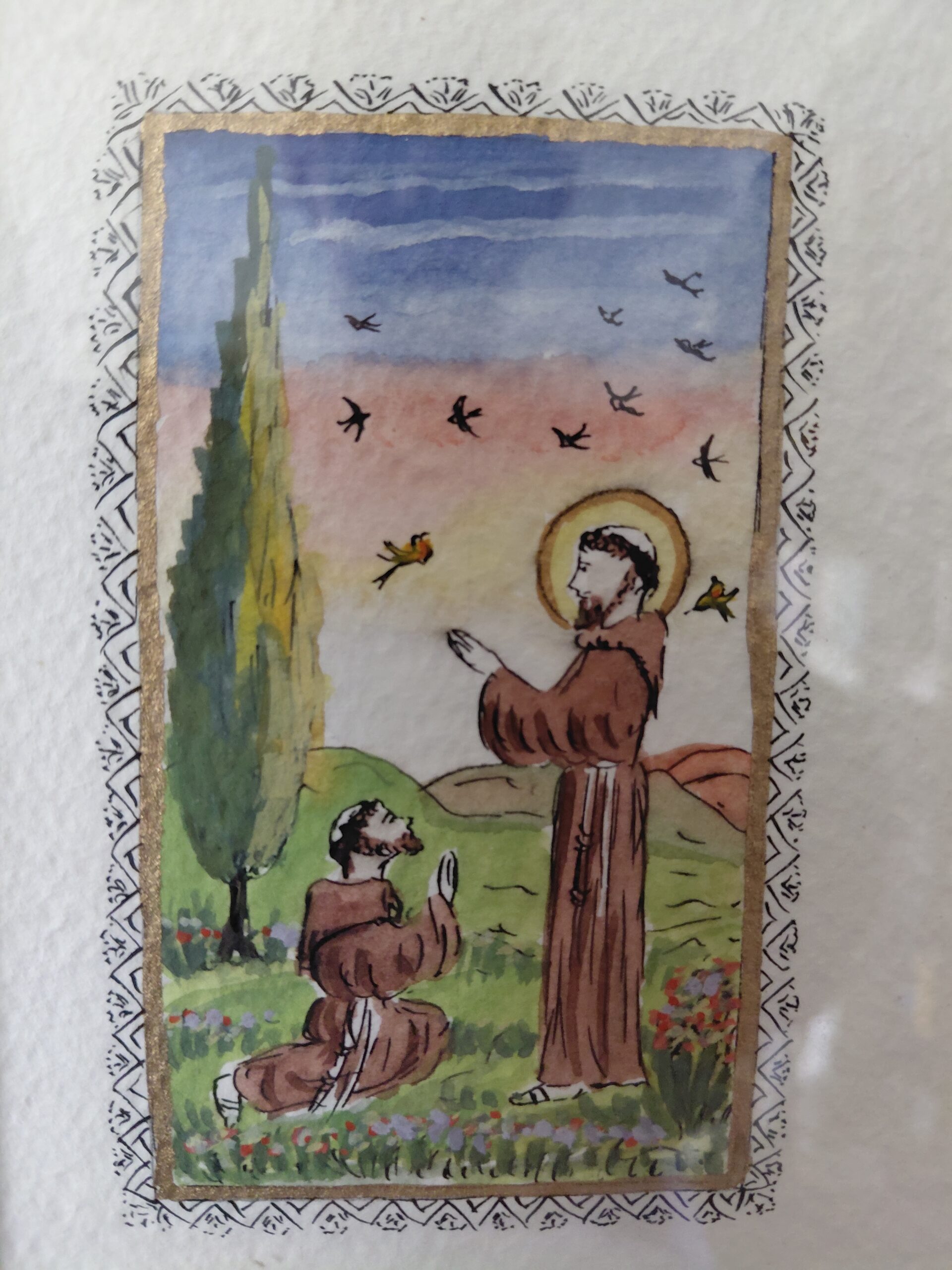
Featured image: Detail of an original painting depicting the teachings of St Francis. Artist anonymous.
Through September, which the Church around the world now designates as the ‘Season of Creation’, I have picked nature-related songs to comment on. This is an English translation of a Korean hymn, based on Matthew 6:25-34. Even with the help of AI, I could not find a performance, or even the tune or lyrics separately, online. So you will just have to imagine the tune if you don’t know it: like the words, it is gentle and flowing, and Korean music uses much the same intervals and harmonies as Celtic, so it sounds somewhat like a Scottish tune ('Ye banks and braes' is a bit like it).
The first two verses are a paraphrase of Jesus’ teaching as recorded by Matthew. In essence, the fact that God has created a world in which beautiful flowers grow in fertile soil, and birds live contented lives chirping merrily as they eat the nuts and seeds that God has provided as their food, should be enough for us to trust in God to provide enough for us to live contented and beautiful lives ourselves without worrying about the future. Just enough, of course: greed is a sin, but asking for our ‘daily bread’ is not.
The third verse includes a summary of Jesus’ teaching. “Let’s be done with anxious thoughts, set aside tomorrow’s cares”. Easy to sing, not so easy to live by. What I did find online was a reference to this hymn in a blog post by Emily R Brink about singing in hard times. Something in the words of this hymn, she writes (I assume it’s those I have just quoted), brings a lump to her throat and she cannot sing it. Such things do happen, I’m experiencing this at present in the early stages of grieving for my wife Linda. A line in a favourite song of hers, or a hymn expressing our faith in resurrection, is enough to stop my voice and make me sit down and weep again. But that’s OK, says Emily, and when we sing such songs in church, we let the rest of the community carry our sorrow as they sing the words on our behalf.
The last verse of the hymn also includes the application of Jesus’ teaching to our lives. “What God wants should be our will, where God calls should be our goal”. That is equally challenging. The setting of this passage in Matthew’s gospel is interesting. It forms part of the ‘Sermon on the Mount’. The longest passage of Jesus’ practical and ethical teachings in the Gospels (chapters 5 to 7). Following that sermon, Jesus performs several miracles in chapter 8, then in chapter 9 he calls Matthew to follow him. We assume, from his ordering of the material, that Matthew was among those who heard the teaching and saw the miracles, before Jesus challenged him to respond my committing his life to Jesus’ new community. So all that about living like the birds in childlike trust is part of the preparation for that commitment.
What I take from this hymn, then, is that although life seems hard for me just now, I need to look up to God and live out the closing lines of the hymn: “Live each day that God provides, putting all our trust in him”. Also to lean on my church community to carry me through these times. And also to look around at the world. My suffering is minuscule compared to that of those thousands who this week mourn the loss of entire families in the Nepalese flood, or who day by day are being killed, bereaved or injured in the unjust wars that rage around the world. How is God calling me to care for them, or for others closer to home? What does he now want me to do with my time and talents, to be part of his provision for other people?