

A sermon for St Peter’s Bramley, morning service 27 September 2026.
One of a series of four on 'Jesus' Priorities'
Text: Luke 6:17-26
I expect you have wondered at some point, maybe often, “What was Jesus really like?” If he walked in here now, in visible form, what would you expect him to look like, and what would you expect his character and attitude to be?
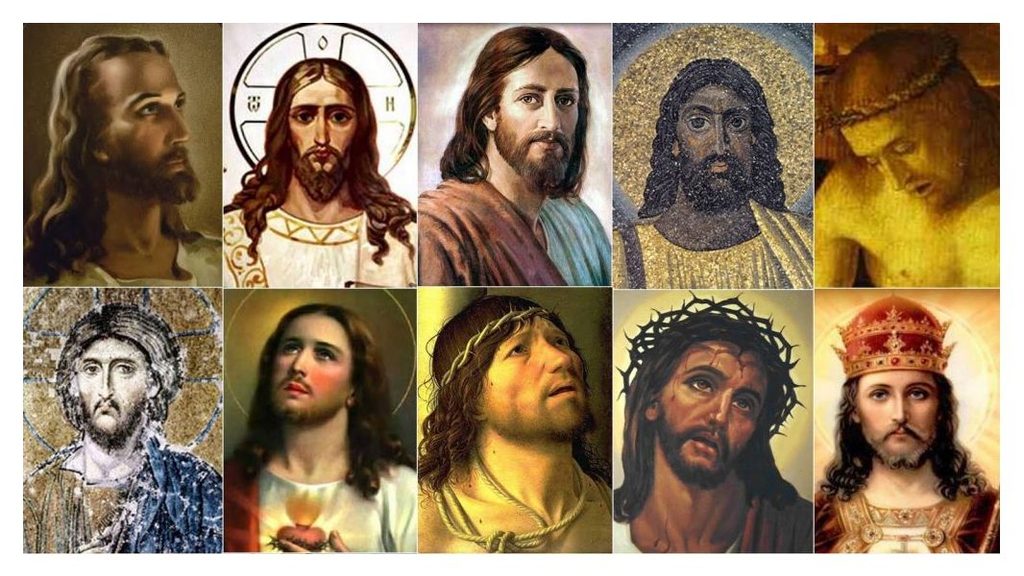
Jesus has been portrayed in many different ways by different artists over the centuries. A selection of these is sometimes used on retreats or training courses to help participants decide which of them correspond with their own internal image of Christ. A few of them are obvious: the boy Jesus, the Good Shepherd, the Lamb of God, the King of Glory, and so on. Other artists, though, have tried to draw out an aspect of Jesus’ character. Such as the holy Christ, the angry Christ, the mystic Christ. The images on screen give an idea of the variety available: there are far more. The image I want us to have in mind today is the compassionate Christ.
What do you think of when you consider the idea of compassion? One dictionary definition is ‘pity or concern for the suffering or difficulties of others’. Let’s have a look at how that pity and concern for others played out in Jesus’ life.
Let’s try to put ourselves in the position of the people Jesus met as he went about Galilee. The early first century AD – the era of Jesus - was a time of great religious fervour. The rebuilt Temple was nearly finished, the synagogue system was well established, and the Jews clung to their ethnic identity in the face of Roman oppression. Keeping the ritual law was vital.
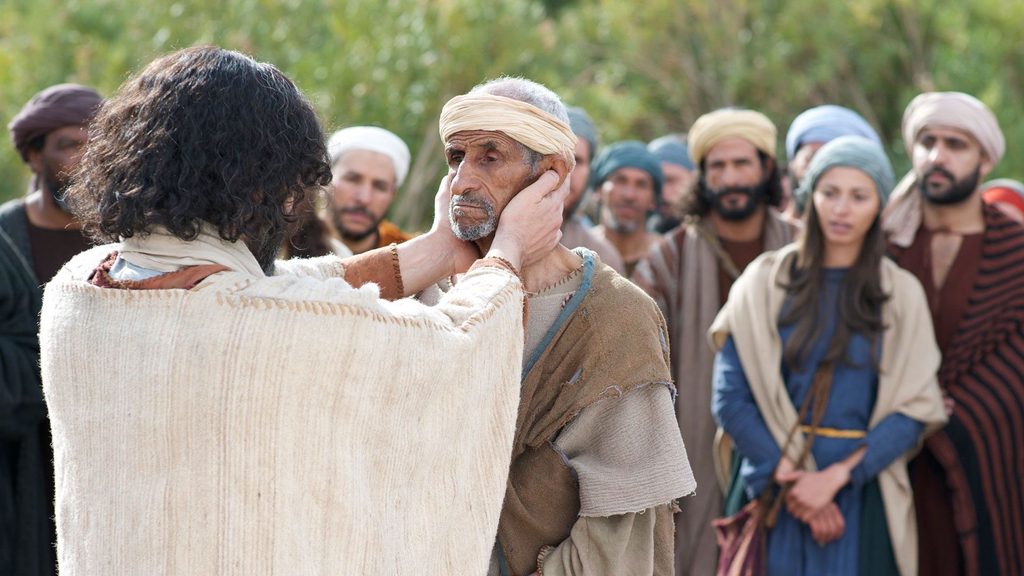
Part of that law was all about purity and being ritually clean. You avoided unnecessary contact with non-Jews. You just did not touch someone who was bleeding or had a skin disease, or even the coffin carrying a dead body. Jesus would have been taught those rules by Mary and the rabbi in Nazareth, I’m sure. But as an adult he did all those things. Along with his miracles, that made him stand out from the other religious teachers and healers of his time.
Look what it says at the start of today’s passage: ‘a great number of people from all over Judea, from Jerusalem, and from the coastal region around Tyre and Sidon’ [those last two places imply non-Jews coming too] – ‘they came to hear him and to be healed of their diseases’. Luke adds, ‘and the people all tried to touch him, because power was coming from him and healing them all.’ The people touched Jesus, and in other places we read that he touched them, whatever their condition. His compassion – his concern for the suffering of others – overcame whatever hesitation he may have had from the Jewish law, so that he came alongside them to heal them.
Why did he touch them? He knew God had given him the power to heal, and other stories show that power could be exercised at a distance. I reckon he touched them for their own benefit. Especially those who were ritually unclean. So that they could feel, maybe for the first time in years, the warm touch of another human hand on their skin. ‘You matter to me, and you matter to God, and there is nothing unclean about you’ was the spoken or unspoken message.
Sometimes, this caring side of Jesus brought him to tears. When his good friend Lazarus died, he wept along with Lazarus’s sisters. He wept over the city of Jerusalem because he knew how much suffering there was in that city.

Jesus was not only known as a healer, but also a teacher. There was no shortage of religious teachers in his day, but again Jesus stood out as different. Crowds hung on his every word as he gave new interpretations of the Jewish holy writings. Interpretations that made sense to them, and felt liberating.
Discipling people to be his followers and understand and apply the scriptures went hand in hand with healing them. This is also a form of compassion: ‘When Jesus saw the crowds, he had compassion on them, because they were harassed and helpless, like sheep without a shepherd’ (Matthew 9:36)’.
Most of the crowds who came to him in the hills, or on the lake, or the ‘level place’ mentioned by Luke, were ordinary folk: fishermen on the lake, farmers inland, merchants and housewives in the towns. He taught them, sometimes plainly and sometimes in parables that were based on everyday life. Our Monday evening discipleship group is looking at the parables between now and Christmas. His compassion for the crowd led him to want to them to understand how the scriptures applied to their ordinary lives, and vice-versa.
As well as crowds, Jesus engaged with individuals, and helped them understand how to live a godly life in a complex world. He spent three intensive years with his band of disciples, equipping them to pass on his message, with the Holy Spirit’s help, after Pentecost. And not only Jews. Think of Zacchaeus, who learnt not to overcharge people. Or the soldiers, who Jesus told to be content with their wages and not oppress people.
I’m sure you’ve heard the story of the feeding of the five thousand. That brought together these two aspects of compassion: teaching them God’s way to live, and feeding them when they got hungry.
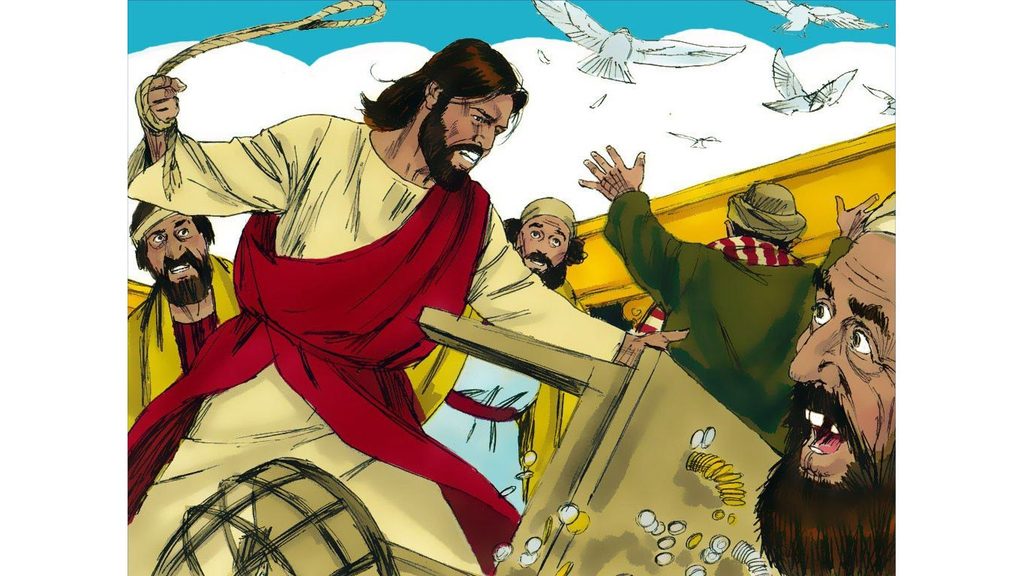
There is a third side to compassion. Sometimes we see that the problems faced by individuals are not of their own making, not something that ‘just happens to them’ such as illness or disability, but the result of being abused or of unjust systems in society. In such circumstances, Jesus’ compassion for those suffering went beyond trying to heal them or provide food, and he challenged head-on those who persisted in abusive behaviour or unjust systems. Think of the woman caught in adultery, when he turned his attention to those who had brought her, making them confront their own sin. Or when he overturned the tables of moneychangers in the Temple, who were making unfair profits from the regulations about sacrifices.
We see this flipside of compassion in the second part of today’s Gospel reading. Jesus pronounces blessings on the poor, the hungry, the mourning and the persecuted, because God would meet their needs. This is one face of Jesus’ compassion. But then he turns 180 degrees and pronounces curses those who cling to wealth, the overfed, and those who laugh at other people’s misfortunes, because God will judge them for such behaviour.
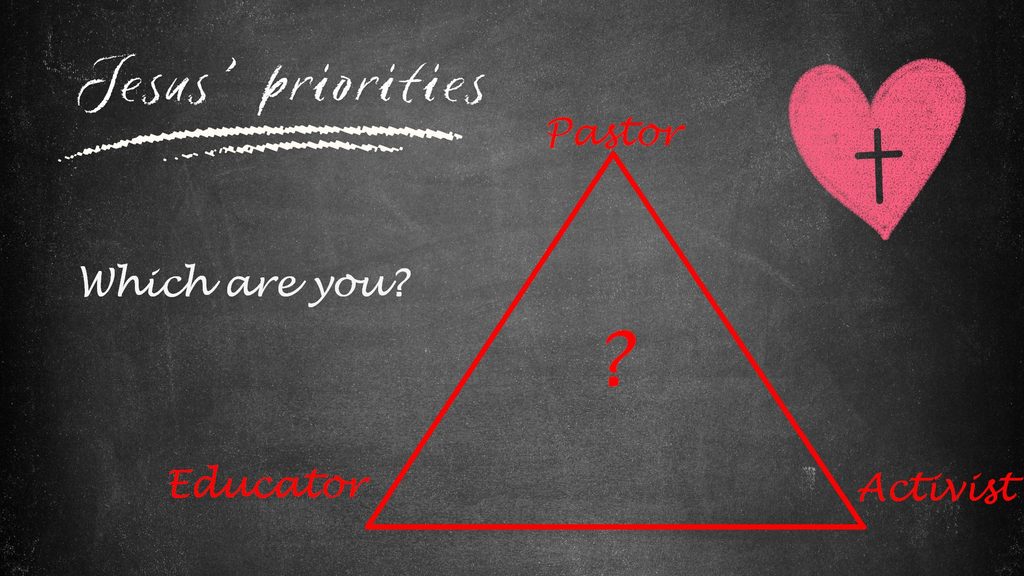
So, we have three different responses that Jesus models when we feel compassion for people’s suffering and difficulties. To be a pastor, getting down alongside people, expressing empathy, touching them where appropriate, healing or feeding or otherwise meeting their practical needs.
To be an educator, a mentor, a discipler, one who helps people understand their situation and how God’s word can apply to their lives. And to be an activist, challenging injustice and abuse.
Jesus, as the Son of God, uniquely held all these qualities perfectly and in balance. And he had spiritual power to perform miracles that we cannot. Each of us is made differently, thank God, with our own unique mix of gifts and character. Some of us will more naturally be drawn to the pastoral ministry, meeting practical and emotional needs. Some will be drawn to teaching and discipling others in the church, or outside it. And some will be called to be activists, tackling systemic problems and influencing wider society. Where are you on this diagram?
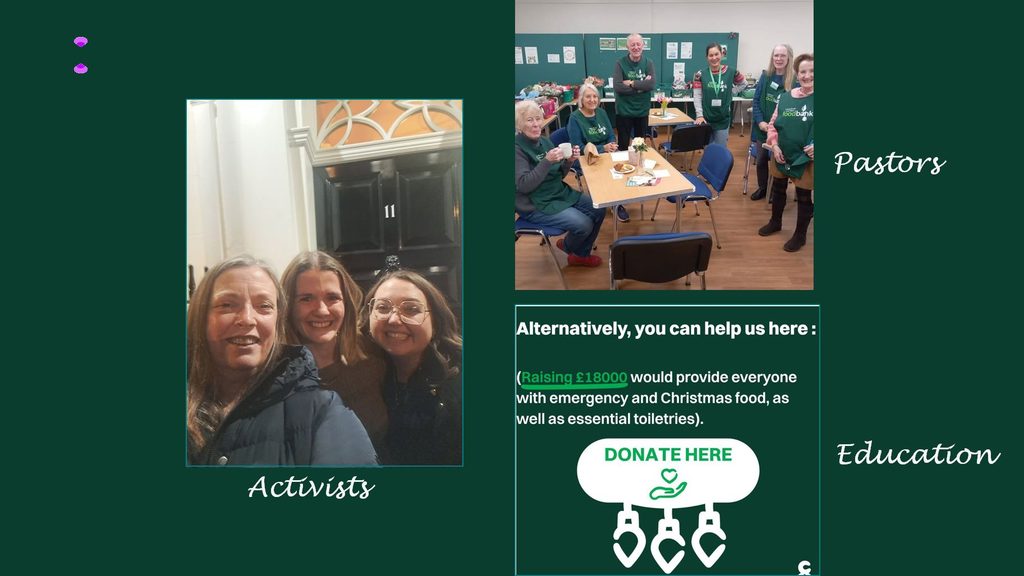
None of us can change the world, as individuals. But we can, with God’s help, play our part and make a difference to the people close to us. Let’s consider the foodbank as an example. Some volunteers pack boxes and bags with a family’s food for a week, or sit with people to listen to them over a cup of tea and help them get the support they need. Others will spread the word, raise awareness of the charity and encourage others in our community to donate money or food to the cause. And others will get involved with the campaigning side, seeking to alter the tax, employment and benefit laws in our country to reduce the need for foodbanks.
Your own background and character will determine how you react to injustice, and how you show compassion. How you respond is between you and God. The only inappropriate response is to do nothing.
Let’s finish by saying together as a prayer, the words on screen, which are a short song by Graham Kendrick:
Soften my heart, Lord,
soften my heart.
From all indifference
set me apart.
To feel your compassion,
to weep with your tears.
Come soften my heart, O Lord,
soften my heart.
Images mostly from FreeBibleImages.org, Courtesy of Lumo Project Films – www.lumoproject.com. Used under Creative Commons CC-BY