
A sermon for St Michael's, Headingley, 6 April 2025 (Passion Sunday)
Texts: 2 Chronicles 35:1-16, Luke 22:1-13
You may, like me and many other people, have been shocked last week to hear of the aggressive arrest by the Metropolitan Police of six young women, members of a pro-Palestinian group. They were meeting peacefully in a Quaker meeting house in London to plan a non-violent protest.[i] The raid took place shortly after sunset. A spokesperson for the Quakers said that it was the first time in living memory that such an incident had taken place in one of their places of worship. But someone must have told the police that they were there.
Tonight’s gospel reading reminded me of this, with its reference to Judas Iscariot being paid by the Temple police to betray Jesus by giving away the location where he would be found after sunset. In the Garden of Gethsemane, as in the meeting house in Westminster, no act of violence was being committed by those being arrested: the use of force was one-sided.
And in both cases, the police – whether of Temple or city – act at the behest of those ultimately in power. Without two Acts of Parliament passed by the previous Government, the climate protesters’ meeting would have been perfectly legal. Now, it seems, it is not. For those who plot, however peacefully, against vested interests in politics will always find themselves opposed, sometimes violently. In that sense, Jesus’ arrest and death was inevitable, merely a matter of time.
The house where the disciples had been meeting before Jesus’ arrest – the ‘Upper Room’ – has also become iconic for Christians. It was not the place where Jesus was crucified, or arrested, or even where he was plotting some act of violence. At most, it could be said, his actions of preaching, teaching and healing in public were disruptive of the established order. The Upper Room is remembered for being where Jesus celebrated Passover for the last time.
For the Jews, Passover was the greatest story of their history, both religious and tribal. Enslaved in Egypt, Moses was called by God to lead a rebellion that was not violent in terms of direct killing. But in terms of the impact of the plagues, it was very disruptive, just as the actions of groups such as Youth Demand or Extinction Rebellion are intended to disrupt society without directly causing injury.
The Passover was the last and greatest of his God-empowered acts of resistance. This time, after many warnings, it was fatal to the Egyptian’s firstborn children, who paid the cost of Pharaoh’s stubbornness. But for the Jews, only their lambs were sacrificed. And that night was to be remembered for all time, the story told by rote, year by year, to each new generation, as the Seder meal of lamb, unleavened bread, bitter herbs and wine was eaten.
The Chronicles reading shows us what a festal Passover in the Temple might have looked like. Leaving aside the actual slaughter, one can imagine something like a grand cathedral service, with civic leaders, priests and singers processing and rituals observed. This is tradition as developed by organised religion.
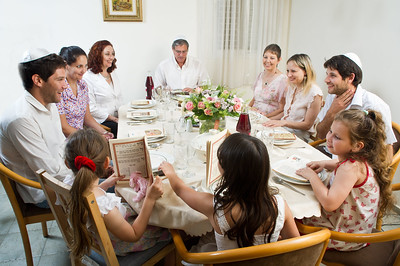
Yet the Passover was originally celebrated in family homes, and is to this day. In that Upper Room, Jesus was indeed celebrating the Passover with family. Not with Mary, James and his other siblings, but with his closest disciples. Do you recall what he said about those who followed him being to him like mother, brother and sisters? As with so many other traditions, Jesus gave a completely new definition of ‘family’.
Jesus sent Peter and John, the closest of his adelphoi, his brothers in faith, to prepare the meal, yet it seems that they still failed to make the connection between the ritual slaughter of a lamb and Jesus’ imminent death, even though John the Baptiser had three years earlier made the connection by calling Jesus ‘Lamb of God’. For when it came to the ritual footwashing[ii], Jesus made himself the servant of all. This was merely the preparation for laying down his life for his friends, as foreshadowed when his feet had recently been anointed with nard, in anticipation (he said) of his burial.
The ritual death of a sacrifice is a concept that runs like a scarlet thread through the Bible, from Abraham’s willingness to sacrifice his son, through the Passover and the laws of Moses, through the days of the Jerusalem Temple, right up to Jesus, the Upper Room and Calvary. Today’s anthem, a setting of “God so loved the world”, will remind us that God “sent his son into the world, that the world through him might be saved”[iii]. How? The ultimate act of non-violent rebellion was to voluntarily accept the role of sacrificial lamb during the Passover feast. Once for all, Jesus – Yeshua, ‘God saves’ - put an end to the need for animal sacrifice by his willing sacrifice in which he bore our sins on the cross.
Just as Jews have remembered the events of the night of the Passover for over three thousand years, so Christians for nearly two thousand years have remembered the events of the Upper Room, Gethsemane and Calvary. Especially, but not only, in Holy Week. Whenever we meet to share the Lord’s Supper, whether in a small upper room as a church family or a Solemn Mass in a grand Cathedral, we continue in that tradition and become part of that story of salvation. It is what has inspired many believers down the centuries to get involved in peaceful protest and non-violent rebellion.
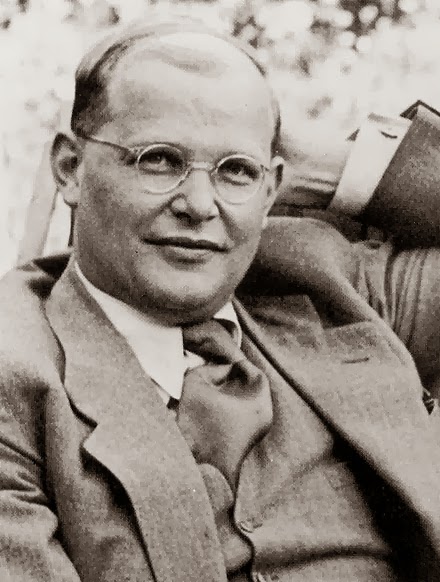
This week the Church remembers the martyr Dietrich Bonhoeffer, who courageously led Christians in standing fimly but peacefully against the atrocity of the Holocaust eighty years ago. He was put to death just weeks before the Allies liberated Germany.
So, what do we take from these examples? The Passover and Holy Week stories, and the witness of people like Bonhoeffer, remind us of the direct but non-violent action of God’s people in the past. When we recall them, perhaps we too will be inspired to ask God how he wants us to act against the injustices we see in the world today. Few will be called to lay down their life, but many may be called to share in Christ’s suffering by experiencing financial penalty, opposition, possibly arrest and even violence, as the cost of standing up for truth.
If you ever find yourself in that place of suffering innocently for standing up to injustice, remember those in whose steps you follow. Remember, too, that you are in the family of the Lamb of God, the one through whose suffering the world is saved, the one who is the Way, the Truth and the Life. Amen.
[i] https://www.quaker.org.uk/news-and-events/news/quakers-condemn-police-raid-on-westminster-meeting-house accessed 31 March 2025
[ii] John 13:1-20
[iii] John 3:17