

A sermon for Bramley St Peter, 18 May 2025. Reading: Acts 11:1-8
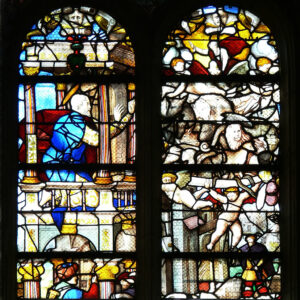
St Etienne, Beauvais Photo (c) 'Walwyn' cc-by-nc-2.0
You may have heard people discussing this last couple of weeks a phrase that the Prime Minister used when talking about immigration: he said that Britain risks becoming an ‘island of strangers’. A place in which people from very different backgrounds live parallel lives, not interacting with each other, not understanding each other, possibly suspicious, maybe even fearful of other groups.
In some ways that’s nothing new, though increasing immigration may make it more obvious. The rich, in any society, have always lived very differently and separately from the poor. England has been known for a long time for a sharper distinction than in other countries between ‘working class’ and ‘middle class’. It’s easier and more comfortable to move in the circles of the people we know and understand than to make the effort to understand others.
The people mentioned in today’s reading: Peter, Cornelius and the Jerusalem believers, also moved in different circles. Let’s explore that a bit more. But first, to put this short reading into context. It’s the start of Peter re-telling to Jewish Christians in Jerusalem what had happened in Joppa and Caesarea on the coast, a day or two’s journey away, as recorded in the previous chapter of Acts. First of all, God had sent an angel to Cornelius, a Roman military commander in Caesarea, telling him to get Peter to come from Joppa and explain how he could be saved. While his servants were on their way there, God gave Peter a vision of a sheet full of animals. The animals in the sheet were those which it was forbidden to eat under Jewish religious law. Peter saw this as a temptation to be resisted and insisted he would never sin in this way. God’s reply is at the heart of the story, and indeed of the Gospel message: ‘Do not call unclean what God has called clean’. In other words, God’s direct message to him on that occasion overruled what was written in the Jewish scriptures and traditions.
It soon becomes clear that this vision is a sort of parable, because almost immediately Cornelius’s servants arrive. Peter realises that after what has been said, God wants him to regard them – Gentiles, non-believers – as ‘clean’, so that it was OK to ‘give them lodging’ that is, to invite them in for a meal and to stay the night in his house.
When he reaches Cornelius’s house, he likewise accepts hospitality from him and preaches the Gospel, with the result that Cornelius and his family are baptised in water and the Holy Spirit.
This is often seen as the moment when the Christian message broke through the barrier that for so long had separated Jewish people from everyone else. To the Jews, all gentiles, but perhaps especially the Roman occupiers of their land, were ritually unclean like inedible animals and one should not even share a meal with them; to the gentiles, Jews were too inward looking and obsessed with their own complex rules for living. Neither side understood the other, for they had no opportunity to get to know one another. But from this day on, the cultural barrier had been broken, just as was foreshadowed at the moment of Jesus’ death when the Temple veil was torn from top to bottom. For in Jesus, God has broken into the world, broken through the barrier of sin that kept us from fellowship with him, and broken through the barriers of suspicion and fear that keep us from fellowship with others.
That, then, is what happened in about AD 36. What can we learn from it today? Let’s look at each of these people or their circle, in turn.
First, the believers in Jerusalem. These were not the Jews who had opposed Jesus and refused to believe in him. No, they were Jews who had accepted Jesus as Messiah and formed the new Christian church in the holy city. But they had yet to be convinced that the good news was equally for the gentiles. Their view, based on earlier ideas of conversion, was that anyone wishing to become a Christian first had to become a Jew, agreeing to obey all the Jewish laws, and for men, being circumcised. When reports of what happened in Caesarea reached them, it mattered less to them that the Holy Spirit had been given to this Roman soldier than that Peter had, horror of horrors, invited Cornelius’ servants into the house of his Jewish host for a meal, and even eaten with the Roman in his own villa. They should not have been surprised really, because that is just what Jesus had been doing. Remember him inviting himself to dinner with Zacchaeus the tax collector?
But let’s give these men their credit where credit is due. When Peter told of his own vision, God’s word not to call people unclean, and of the angel appearing to Cornelus, they were willing to change their minds and gave their agreement to the continued mission to the Gentiles. The rest, as they say, is history.
The lesson from them to us is to be open to other people challenging our own prejudices. In recent years the term ‘unconscious bias’ has become common: the prejudices we have about other people that we might not even realise we have, or cannot easily put into words. Sometimes it takes an encounter with someone from a different group to challenge that, and we need to be open to God working in us through such encounters. That might be joining Christians who worship in a different way, or visiting the house of prayer of another religion. Or it might be encountering people from a different social group within our own community, perhaps through volunteering with the church or local charity.
Secondly, Peter. He had already changed much from when Jesus first called him on the beach near Capernaum. He had left his family, followed Jesus, experienced the events of Holy Week and become convinced of the Resurrection. From provincial fisherman he was appointed leader of what would become the worldwide church. Yet, he also retained a suspicion of the Romans in particular – quite understandably, as it was another centurion acting on orders from Pilate who arranged Jesus’ crucifixion. His own devotion to holy living is commendable: “nothing profane or unclean has ever entered my mouth”. But at this minute, it was working against God’s agenda, against his vocation as apostle to the gentiles. He needed to be convinced that the message of the Cross, the Resurrection and Pentecost was equally for non-Jews as for the Jews themselves: as he said to Cornelius, “Now I truly understand that God shows no partiality, but in every nation everyone who fears him and does what is right is acceptable to him”.
A word of caution here: ”God shows no partiality” does not mean that how we live or our beliefs do not matter to God. Rather, it means that whatever religious or cultural background someone comes from, the way to God is equally open, without having to become Jewish. For many people, becoming a Christian does mean renouncing beliefs or practices that they had held. But the fact that someone holds such beliefs or does such things should not stop the Holy Spirit working in them.
So we should be open to the Holy Spirit speaking to us as he did to Peter: to prepare us in advance for encounters with people of a very different background to our own, so that we can be confident to give and accept hospitality, and go into what might otherwise be uncomfortable situations knowing that God is with us and blesses us and others through that encounter.
And so to Cornelius. He was a ‘God-fearer’. Though coming from a culture where worship of idols and even the Emperor was the norm, he had recognised in the Jews he met a right way of living and an attractive belief in one God. Perhaps it was the need to be circumcised that had prevented him from taking the step of formally becoming a convert, who knows? So when Peter responded to the summons and came to his house to explain the Gospel, Cornelius was ready and eager to hear. He sought acceptance from the Jews; he found it in Peter, or rather in Jesus Christ to whom Peter bore witness, and in the new church that Peter represented.
Which of these, then, best represents where you are in your journey of faith? Perhaps you are like the Jerusalem believers: a long term Christian, but maybe a bit too tied to particular ways of expressing that faith, maybe not yet recognising new ways in which the Spirit is moving, needing to be convinced that a radically different approach to faith coming from an unfamiliar culture is just as valid. If so, may God affirm your own faithfulness to him and open you to see the faithfulness of others.
Or perhaps you are more like Peter: already on a journey of faith that has changed you, but wary of sharing that faith with people from different backgrounds. Committed to being holy in the way that you understand holiness, but in a way that without realising it, prevents you from sharing the Gospel with anyone you meet? If so, may God challenge you when the time is right, and prepare you for encounters that will change both you and the people you meet.
Or perhaps you are like Cornelius: coming from a very different cultural and religious background, attracted by what you have seen of Christianity but feeling that you don’t fit in, or are unworthy, and not yet ready to make the leap of faith and being baptised? If so, may God bless you with an understanding that he shows no partiality and that you are as welcome at his table as anyone.
To conclude, a prayer from the Lindisfarne community:
O Christ, you had compassion on the crowds.
You drew people to yourself,
you repelled none who knew they were needy.
Grant us hearts like yours;
hearts that go out in genuine greeting
and humble welcome.
Until, in the fellowship of sharing,
souls are drawn to You.
Amen.
References:
'Acts for Everyone' Volume 1, Tom Wright, SPCK 2008
Concluding prayer: from 'A Holy Island Prayer Book', Ray Simpson, Canterbury Press 2002, p.77