
Common Ground Song 97 ‘Oh the Life of the World’
Words / Music: © Kathy & Ian Galloway
YouTube recording: https://www.youtube.com/watch?v=ENg2_3UrENo
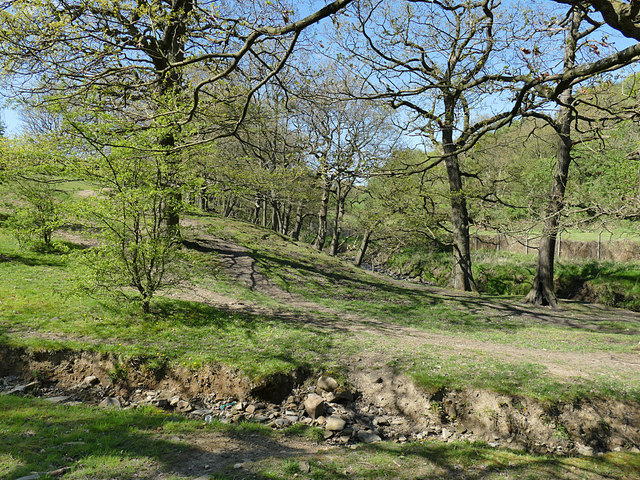
Featured image: Trees by Tyersal Beck © Stephen Craven
This is another song in the Scottish folk style. The first verse celebrates as ‘a joy and a treasure’ the beauty of nature: stars, seas, trees, landscape, and the changing seasons. In other words, the vastness and complexity of creation in general, and of life on earth in particular, which could be unique, or at least incredibly rare, in the universe (astronomers still debate this).
The second verse acknowledges that the complexity and fecundity of nature has its downsides: there is hard work as well as passion, the joy and pain of childbirth, noisy cities as well as places to be silent and nurture wisdom.
The third verse has a key phrase, for me: ‘the life of the world is the source of our healing’. This is said to be through ‘laughter, song, care of the poor and broken’. It is now well established that these things (laughing, music, and altruism) are all good, even essential, for our mental well-being, and also that our mental and physical well-being are intimately connected.
The reference in the second verse to ‘the sound of the city and the silence of wisdom’ fits in there too. You do not have to go far from a city to find beauty and silence (the featured photo is less than a mile from Tyersal, one of the most deprived parts of Bradford), but many people don’t take the opportunity to do so. Someone who never laughs, does not make music, lives selfishly or in isolation, and does not take time out in nature, is unlikely to be in a good place mentally, and more likely to suffer physically.
This is an interesting song, for another reason: the first three verses (of four) contain no religious language at all. Anyone, religious or not, could agree with their sentiments. Only in the last verse is God invoked, and this being a Christian song, it is in a Trinitarian form. We are asked to thank and to love the Maker (Creator/Father), rejoice in the gift of the Son (Christ), and walk in the peace and the power of the Spirit.
You do not have to believe in a creator to be entranced by the world’s beauty and complexity, or to be concerned for the wellbeing of its creatures (especially our fellow humans). The difference is that a humanist strives for this for its own sake, whereas the believer takes God’s instruction to care for his creation. Let us therefore work together with all people of good will to make the world a better place, and for the healing of the nations.