
Common Ground Song 149 ‘You shall go out with joy’
Words: Steffi Karen Rubin / Music: Stuart Dauermann © Lillenas Publishing Co
YouTube recording: https://www.youtube.com/watch?v=ivfUKd6AFXw
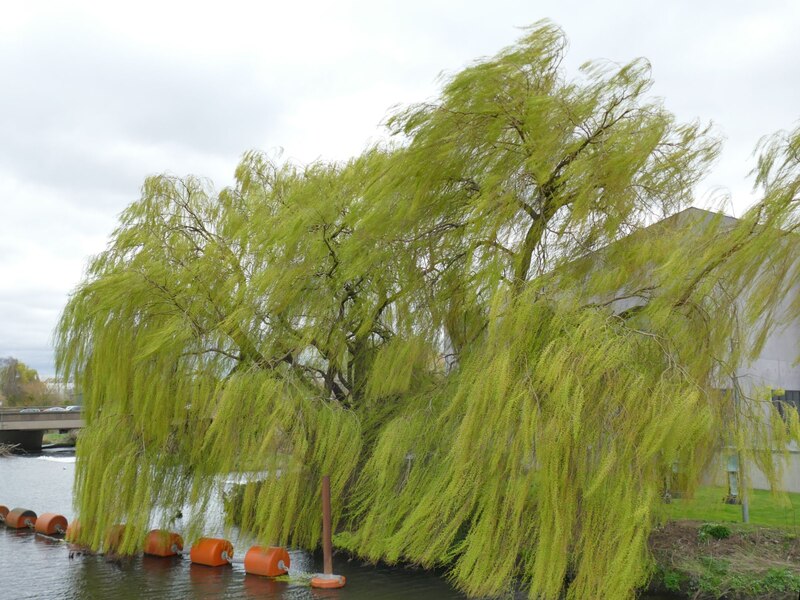
Featured image: weeping willow © Stephen Craven
This joyful song is now fifty years old (the copyright is dated 1975) and has become popular in many Christian traditions. I most recently sang it only a week ago, at the farewell service for Phil & Di Stone, the retiring and much-loved leaders of the Scargill Movement. It was a reminder that tearful farewells are at the same time joyful, as we gave hearty thanks for their sixteen years of ministry, and wished them the very best for their future.
According to the notes that accompany the recording linked above, “Both text and tune were written for the Liberated Wailing Wall, the touring singing group of Jews for Jesus.” That would certainly explain the style of the music, and the tradition of singing it three or more times, getting faster each time and often finishing with a loud shout of ‘hey!’ This is also a song based on a text from the Jewish scriptures (Isaiah 55:12). This Jewish style of singing praise also goes along with their traditions of circle dancing, which I first encountered on a holiday at Lee Abbey, Scargill’s ‘mother community’ in Devon, in the early 1980s. I cannot recall now whether we sang ‘You shall go out with joy’ on that occasion, but we may well have done.
It also reminds me of a saying of Jesus, “To what can I compare this generation? They are like children sitting in the marketplaces and calling out to others: ‘We played the pipe for you, and you did not dance; we sang a dirge, and you did not mourn.’” (Matthew 11:16-17). He was responding to those who considered the joyful attitude to life of Jesus and his disciples to be too frivolous, too ‘unreligious’. His ‘religious’ critics despised the showing of emotions in worship, yet their own holy book had this wonderful imagery of hills shouting for joy and trees clapping their hands. A problem verse for those who try to take the whole Bible literally, of course. I have never seen a tree clapping. But I have seen them blowing in the wind, like this magnificent weeping willow on the banks of the river Calder. Interpreted as meaning that there is a liveliness in all created things, it makes a lot of sense.
Jesus seems to have considered it essential to be open with our emotions. It does not always have to be unrestrained joy: his reference to playing a dirge reminds us that religious rituals include those of mourning as well as celebration, where hand clapping and dancing would indeed be out of place. “There is a time to weep and a time to laugh, a time to mourn and a time to dance,” (Ecclesiastes 3:4). So, may we always be willing to shout, clap hands or otherwise rejoice together, or to weep together if appropriate, when we come together to worship God.