
Wednesday 22 July. Song 64 ‘Iona Gloria’
Words / Music: traditional
Audio recording: https://music.churchofscotland.org.uk/hymn/761-gloria-gloria-gloria (see note below)
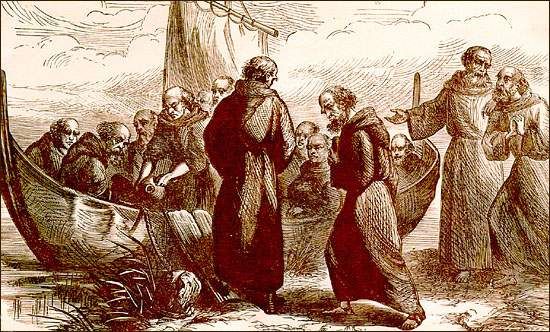
Featured image: St Brendan and his monks setting sail (artist unknown, C19)
The text of this song is very simple: the first line of the ancient canticle ‘Gloria in excelsis Deo’ (Glory be to God on high). The music is also simple, basically variations on the chord of D major for three parts. I could not find an online recording of this exact combination of words and music, other than the audio-only version linked above.
According to the editors’ notes, the tradition is that this would be sung by the monks of Iona when starting a missionary journey by sea. Those on the boat and those watching from the shore would sing it responsively until they could no longer hear each other. In that way, the departing brothers and their mission were dedicated to the glory of God. The Scargill community to which I belonged had a similar tradition called ‘banging off’; as someone’s time with the residential community came to an end and they moved on to a new phase of their Christian life, the rest of the community would gather round them in a circle to pray a blessing on them, then making as much noise as possible, with drums, pots and pans or whatever, as they depart. It is also a common practice in churches, when a member of the congregation is called to a particular challenge, or leaves for a fixed time or indefinitely on God’s service, for a select number of the congregation along with the priest or pastor to send them on their way with prayer. The chanting of this short canticle as they leave is a tradition worth reviving.
An echo of the same sort of idea, of sending someone away with sound rather than silence, might be found in the 20th century English tradition, which seems to have died out now, of tying tin cans to the rear of the car of a newly married couple leaving the wedding venue, to make a noise as they drive away (the words ‘newly married’ would also be written on the car in some way). Also in the tradition of a ship sounding its hooter as it leaves port. Perhaps as humans, our need for connection with others means that parting from someone in silence feels awkward, and customs like these keep us in touch as long as sound can carry between us. There is just a hint of this in Luke’s account of the Ascension: ‘Now as [Jesus] blessed them, he withdrew from them and was carried up into heaven. They worshipped him and then went back to Jerusalem full of joy’ (Luke 24:51-52). I wonder if that worship took the form of Jesus and the disciples singing to each other as he was taken up into heaven? Luke does not say, and we will never know.