

or, Taking responsibility – the elders of Israel
for St Peter’s Bramley, 27 July 2025
part of a series on 1 Samuel based on the book ‘Men Behaving Badly’ [1]
1 Samuel 12:12-25 / Matthew 22.15-22
Here we are, in 2025. What a year it’s been so far, and we’re barely half way through! In the last few years, we have seen a time of political upheaval around the world. Historians tell us there are more conflicts under way than at any time since the Second World War. Russia’s war against Ukraine continues with increasing Western involvement, Israel and Hamas battle it out over Gaza at the price of killing and starving its citizens, and the numerous tribal conflicts throughout Africa rumble on below the radar of most of our media. While our backs are turned, China threatens Taiwan, Thailand and Cambodia start a new conflict and India and Pakistan rattle their nuclear sabres. The far right gains influence in many countries including our own. Even in the democratic United States, people are asking if the Trump regime marks the beginning of the end of democracy there.
The media have a term for when one set of leaders is replaced by another, with a very different way of doing things: ‘Regime change’. It’s nothing new: the very phrase ‘regime change’ was first coined in 1925 – one hundred years ago. But let’s be clear what the term means. Regime change does not describe a democratic process such as when a Conservative government is outvoted by Labour supporters. Regime change means a forceful takeover, intended to install better leadership when things have gone wrong, to improve people’s lives.
It’s a concept that doesn’t only apply to nations. We see regime change happening when a football manager is sacked before the end of his contract because of his team’s poor performance, and replaced by someone from outside the English leagues. We see it when a failing school is given a new headteacher with a proven track record elsewhere, to turn the school around and improve students’ results and discipline. In my former career as a civil engineer, I experienced it when the consultancy I worked for was the subject of a takeover by a more dynamic, multinational company, who introduced new American management techniques instead of the gentler British way of doing business that we had before.
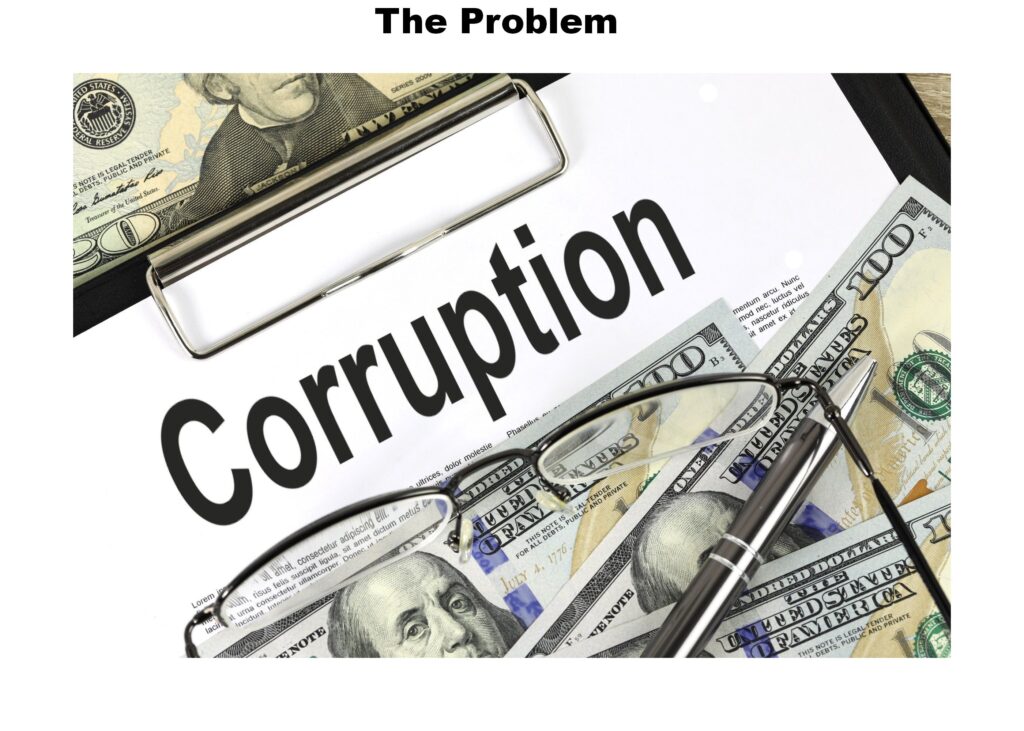
Regime change is also the theme that runs through the book of 1 Samuel that we are studying this summer. A period of political upheaval for the people of Israel as one form of governance replaces another over the lifetimes of Samuel and Saul. Why was it needed? A lack of responsible leadership. Samuel himself was not the failed leader; in fact the people have to acknowledge that he was a holy man with no hint of corruption. The problem, it seems, was partly with his sons, who in the way of ruling dynasties everywhere took over as Samuel became too old to govern, and they were not good rulers. We are told in chapter 8 that they ‘turned aside after gain, took bribes and perverted justice’.[2] Samuel was reluctant even to acknowledge his sons’ failings, or do anything about it. There was a crisis of leadership. So what was to happen?
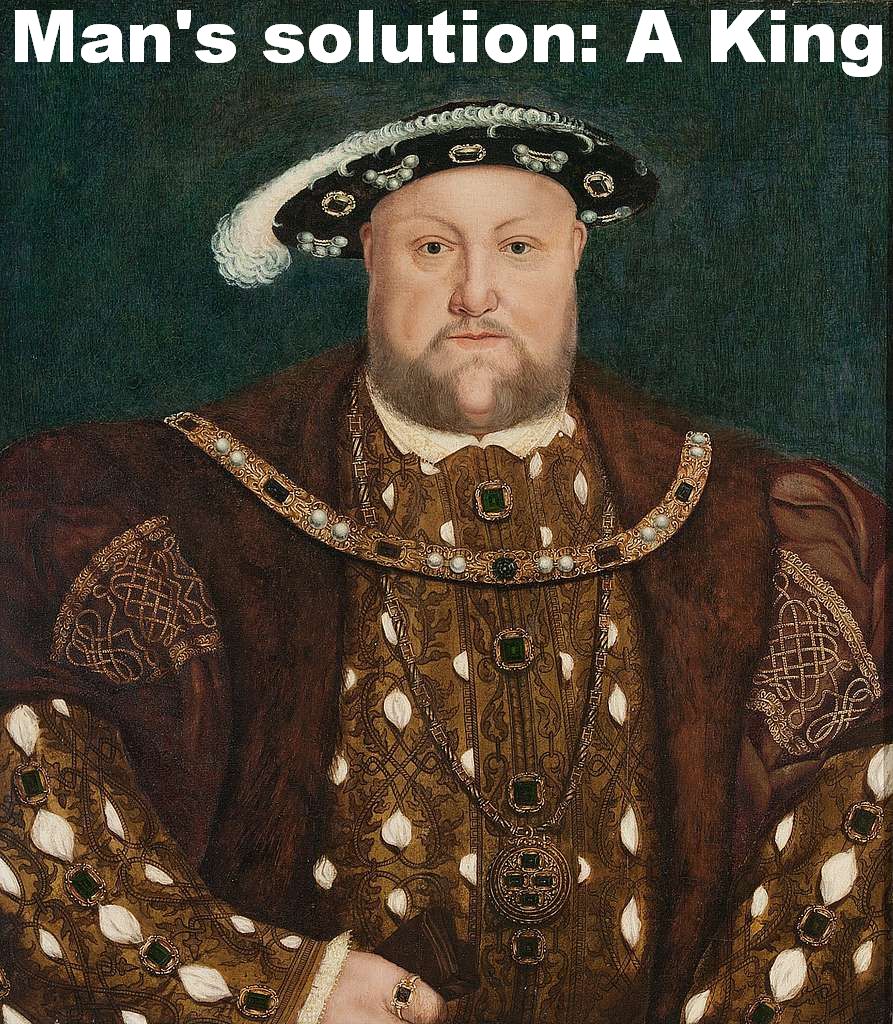
We are told that the ‘Elders of Israel’ came to Samuel, the outgoing leader, and asked for change. Instead of his sons, they wanted a ‘King’ like those in the nations around them who made laws and led them in battle. But was Samuel not a king already? No. Why not?
There are basically three models of government, each with variations. You can have democracy, from the bottom up, where the people of a nation choose their leader. You can have autocracy, from the top down, where there is a leader who is not directly chosen – maybe a king or queen, maybe a self-appointed dictator or military general installed after a coup. Or, you can have theocracy, from the outside in, where God himself is the ruler. Or there is anarchy – no ruler at all – but let’s not go there.
What had made Israel different from all other nations was that they had the last option, a theocracy. Their king was the unseen God, he was the owner of the land of which they were merely stewards, and their laws were those given by God to Moses.[3] Samuel and his predecessors were called ‘judges’, not kings. They merely applied the laws God had given, or more accurately mediated the covenant that God made with his people: laws designed to maintain peace and justice for all people. The people, in return, were also to trust in God, and not in military strength, to maintain peace with their neighbours. It was those laws that Samuel’s sons, who were meant to uphold them, were themselves breaking.[4]
Instead of asking God to appoint a better man or woman to judge them, the elders – that is, the leaders of the twelve tribes – wanted to change to a completely different system of government. They could have taken the responsibility themselves by setting up a democracy. But they didn’t. They chose autocracy, putting all the responsibility on the king who Samuel would appoint in place of his own sons. A powerful man who would take the responsibility, both making and upholding the law, and to lead them in battle. There is no reference to God’s role in the matter.
It's tempting to imagine the slogan that the elders might have chanted: ‘Make Israel Great Again’. “Give us a king who will be tough on foreigners, boost the economy, expand our territory”. Samuel consults God in fervent prayer and receives God’s answer: the people are making a grave mistake by rejecting God as their king, but he would respect their freedom and allow it.
A good king might not be a bad thing, if he acknowledged God in his law-making and rule. But Samuel was to warn the elders that their kings, man’s solution to the problem, would in practice fall into all the greedy and selfish ways that many unelected leaders do: they would confiscate God’s land for the state, conscript young men into the army, and employ a large supporting staff for their palace. To pay for all that, they would have to tax the people heavily. It would not be good for the nation. [5] At the end of our reading, God explains that they still face a choice: if both king and people follow God’s laws, they will have peace: if not, then they have wasted their last chance and both king and people will be ‘swept away’.[6]
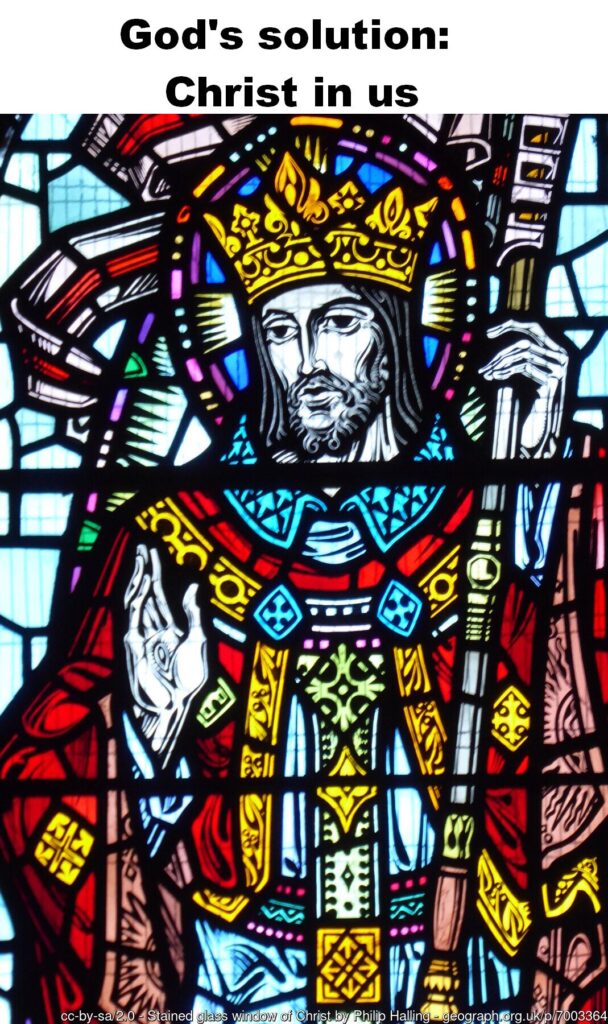
If a king was man’s solution to the crisis of leadership, what was God’s solution? The elders should have known the answer. Only a few years earlier when there was a war with the Philistines, they had fasted and prayed and Samuel offered sacrifice, and God won the victory for them. That had been the pattern of Israel’s history: God will answer honest and humble prayer by the whole people, taking responsibility for their situation, that acknowledges him as the King. Note that – the whole people. It was not only Samuel’s sons who were responsible for the present crisis, it was also the whole people of Israel, and especially the elders who represented them. These elders were the men who evaded their responsibility by asking for a king to sort out their problems, and not turning to God for an answer. The rest of the books of Samuel, as we shall hear over the next few weeks, show how God’s warning came true, that seeking regime change by appointing a king in place of God’s chosen judge was not the answer to their problems.
There is a lesson for the church here. Although Jesus appointed Peter to be the rock of his church, it was the whole company of the apostles who received the Holy Spirit and who made the key decisions in those early years. The early church was congregational: any leaders were selected locally according to their gifts, without any central government.
The Church is a theocracy, not an autocracy. Our theology of leadership starts with belief in Christ, the descendant of King David, risen and ascended, who is our unseen king in heaven now, and who will one day come as judge to rule in justice for ever. The ultimate regime change.
While we wait for Christ’s return, the Bible does not promote anarchy, but human authority in both church and politics must be subject to Him. The Gospel reading today teaches us to ‘give the Emperor what is the Emperor’s, and give God what is his’.[7] This applies not only to paying taxes, but more generally, we are expected to be involved in the governance of the church and of our wider communities. At present, we are all being given the chance to say what we would like to see in the next Bishop of Leeds, I have the QR code you can scan. God’s acceptance of our chosen leaders – bishops or politicians - is always on the condition that we honour Christ as head of the Church, and that all Christians share in the responsibility for the life of the Church.[8]
Some years ago there was an advert for a satnav system that read ‘You are not stuck in traffic. You are traffic.’ I’m adapting that: ‘You are not subject to regime change. You are regime change!’ Understanding this, taking it on board, is vital for us as Christians.
We rightly start the Christian life by ‘going to church’ and ‘accepting Christ’. But we need to move on, to think in terms of ‘being church’ and ‘being Christ to others’. When we are baptised we promise to reject evil influences, turn to Christ and accept Christ as Lord. Discipleship can therefore be seen as a ‘voluntary regime change’ – instead of the anarchy of ‘looking out for number one’, we put ourselves under the kingship of Christ. Our calling as Christians is not just to be saved from sin, but to be part of God’s whole redemptive plan for the world. Once you understand that, once it becomes part of your frame of reference for living, the whole of Christianity begins to make much more sense.
The good news is that God is at work in us through his Holy Spirit, not just for our individual benefit but so that as a church community we can share responsibility in the Church, and contribute positively to our local community. Each in our own way is called to be for those we meet part of the Church of Christ, and his coming Kingdom, part of his offer of regime change.
So, to bring all this together. At a time of change and uncertainty in the world we respond not in fear but in expectation. Not by asking for a human leader to come and sort everything out, which will only lead to disappointment at best, but by living in expectation of a God who will deal with corrupt leaders, and by taking responsibility for whatever small positive changes we can make as individuals and as a church.
We don’t know what the political and economic scene in Europe or the Middle East will look like this time next year or in a generation from now, what regimes will have been rejected or imposed. We can only trust that in the long term God’s will is done. But God’s kingdom – the reign of Christ the King - will also come through us, the Church, who are the body of Christ, and by the gifts of wisdom, revelation and enlightenment that he sends through the Holy Spirit.
My brothers and sisters, let us take our part with the Church in Christ’s redeeming work, as we meet the needs of a turbulent world in His name. We are regime change. Amen!
[1] John Goldingay, ‘Men Behaving Badly’, Paternoster Press 2000.
Some text in this sermon also taken or adapted from an earlier sermon ‘Regime Change God’s Way’ (2011)
[2] 1 Samuel 8:3; Goldingay p.58
[3] Walter Bruegemann, ‘Interpretation: First and Second Samuel’, John Knox Press 1990, p.89
[4] Laurence E Porter in ‘A Bible Commentary for Today’, Pickering & Inglis 1979, p. 389.
[5] 1 Samuel 8:9
[6] 1 Samuel 12:25; Bruegemann p.95
[7] Matthew 22:21
[8] Goldingay p.58